
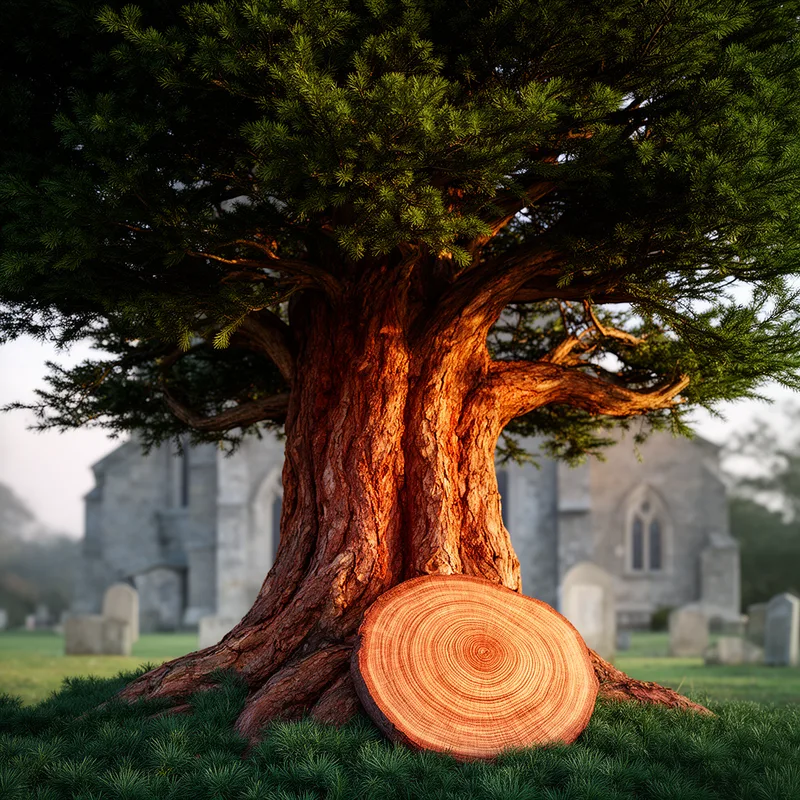
Old World yew
- noun
- UK
- The ancient Old World yew in the churchyard is believed to be over a thousand years old.
Examples
-
The Old World yew is known for its longevity and slow growth, making it a favorite among gardeners.
-
Many traditional English gardens feature at least one Old World yew as a decorative evergreen.
-
Botanists studied the growth rings of a mature Old World yew to estimate its age.
-
The Old World yew can live for thousands of years.
-
Many gardeners appreciate the Old World yew for its beauty.
-
The ancient Old World yew in the churchyard is believed to be over a thousand years old.
-
Many traditional English gardens feature at least one Old World yew as a decorative evergreen.
Synonyms
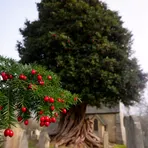
A long-lived evergreen tree from Europe and western Asia with dark green leaves and red poisonous berries

An evergreen tree from Europe that grows slowly and can live for a very long time
Surface Forms
Morphology
The phrase is a straightforward noun phrase: 'Old World' modifies 'yew' to indicate provenance, so a learner who knows 'old', 'world' and 'yew' can infer it refers to a yew species from the Old World (Europe/Asia). 'Old World' is a common geographical/historical label cross-linguistically, so the meaning is compositionally derivable rather than idiomatic.
Etymology
The name Old World yew comes from the words Old World and yew: Old World was the name people used for Europe and Asia before the Americas were known, and a yew is a slow-growing evergreen often seen in very old churchyards. So, Old World yew means a yew species from Europe and parts of Asia and is often very old.

