
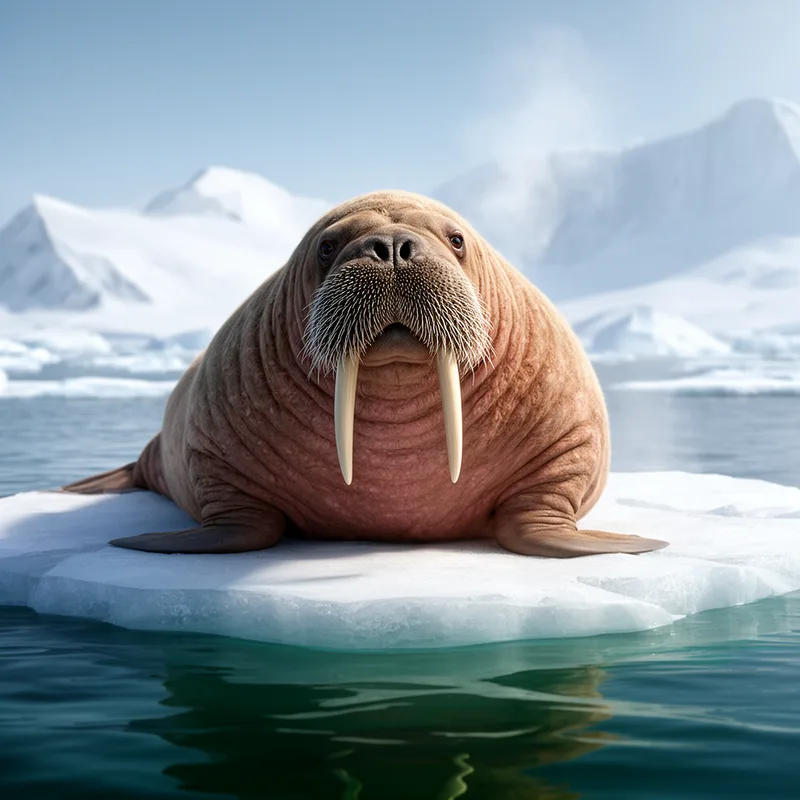
Odobenus rosmarus
- noun
- /ˌoʊdəˈbiːnəs ˈrɒzmərəs/
- Specialized
- The thick blubber of Odobenus rosmarus provides insulation in freezing waters.
Examples
-
Did you know that the Odobenus rosmarus can weigh over 2,000 pounds?
-
Scientists have studied Odobenus rosmarus to learn more about Arctic marine ecosystems.
-
Conservation efforts focus on protecting the habitat of Odobenus rosmarus from climate change.
-
The Odobenus rosmarus is often found on ice floes.
-
Researchers are studying the migration patterns of Odobenus rosmarus in the Arctic Ocean.
-
In the frigid waters of the north, Odobenus rosmarus often dives deep to find food.
-
Tourists visit the northern regions to observe Odobenus rosmarus in their natural habitat.
Synonyms

 23
2.1
23
2.1

A large sea mammal with long tusks, whiskers, and thick fat that lives in Arctic seas
Surface Forms
Morphology
Odobenus + rosmarus
This is a scientific Latin binomial (genus + species) rather than an English phrase whose meaning is built from common English words; knowing the parts 'Odobenus' and 'rosmarus' does not transparently yield 'walrus'. One constituent is even not a regular English word in the data, and taxonomic names function as arbitrary labels that require specific background knowledge, so a B1 learner who merely knows the listed constituents would not infer the intended meaning.
Etymology
Odobenus rosmarus may come from old words: Odobenus links to ideas like 'tooth' and 'to walk' because walruses use their long tusks to pull themselves on ice, and rosmarus comes from an old sea word meaning 'sea horse'. So the name paints the picture of a tusked sea animal and helps you remember it means 'walrus'.