
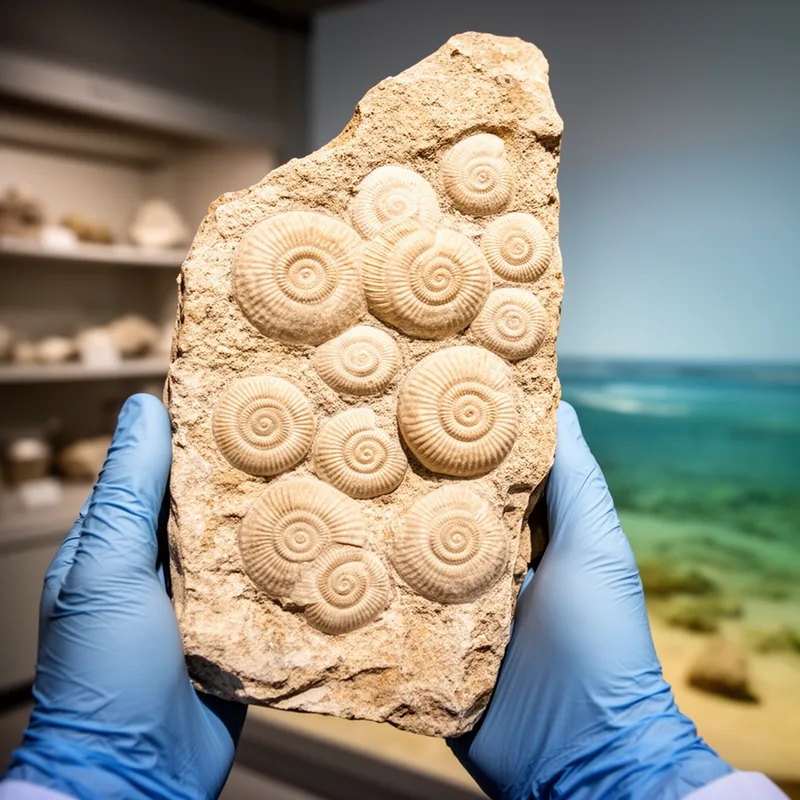
Nummulitidae
- noun
- /ˌnʌməˈlɪtəˌdeɪ/
- Specialized
- Many species in the Nummulitidae are characterized by their coin-shaped shells.
Examples
-
Fossils from the Nummulitidae family are often used to date Eocene sedimentary rocks.
-
Fossils of Nummulitidae are often found in limestone.
-
Geologists studied the Nummulitidae to understand ancient marine environments.
-
The Nummulitidae family includes many fascinating species.
-
Fossils from the Nummulitidae family can provide insights into the Earth's geological history.
-
Researchers believe that studying Nummulitidae will enhance our understanding of ancient ecosystems.
-
The distinctive, coin-shaped shells of Nummulitidae have made them important for geological dating.
Surface Forms
Morphology
Nummulitidae = Nummulites (opaque) = Nummulites + idae
Although formed by adding the taxonomic family suffix '-idae' to the genus name, this scientific formation is specialized and not deducible by the average learner.
Etymology
Nummulitidae comes from the fossil name Nummulites, from Latin nummulus 'little coin' and nummus 'coin', plus the family ending -idae. So these single-celled fossils were named because their shells look like small coins, which helps you remember they are round, coin-shaped shells used by geologists to study old rocks.

