
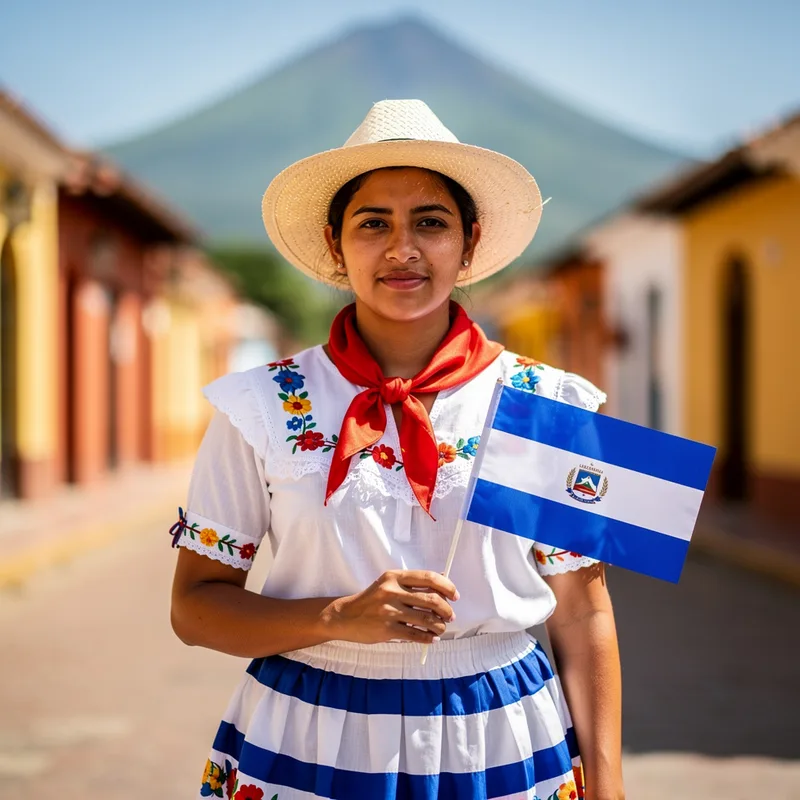
Nicaraguan
 4
2.7

- noun
- /ˌnɪkəˈrɑːɡwən/
- Similarly, 86.7 percent of the Nicaraguans reported almost never participating in campaign activities.
- the majority of Nicaraguans
- most Nicaraguans
- Nicaraguans and Cubans
Loading YouTube…
Watch on YouTubeSo the Contras were Nicaraguans, the Sandinistas were Nicaraguans.
- So the Contras were Nicaraguans, the Sandinistas were Nicaraguans.
Examples
-
On 4 November 1984, approximately 1.2 million Nicaraguans voted to elect a president and a National Assembly.
Academic text (1990) -
The social structure this implied seemed as inevitable to me as it would to a young Nicaraguan.
Academic text (2004) -
Nicaraguans consider the exercise a serious act of aggression.
-
The loss clearly affects all Nicaraguans, but most notably the poor.
Academic text (2005) -
These were Nicaraguans working for the CIA-run army.
-
Where are all the enterprising Nicaraguans trying to sell me stuff?
Blog text (14) -
Cardenal estimates that over two thousand Nicaraguans have attended workshops at some point.
Academic text (1992) -
Indeed, the M&R poll shows that 42% of all Nicaraguans don't care about the U.S. elections at all.
Blog text (24) -
Some Nicaraguans die waiting in vain for rudimentary medical care that they can't afford to purchase.
Academic text (2005) -
The Nicaraguan people celebrated their independence day with parades and festivities.
Surface Forms
Morphology
Etymology
Nicaraguan comes from the country name Nicaragua, which may come from the name of a local chief Nicarao or from words that mean 'here by the water'. The ending -an means 'from', just like in American or Canadian, so a Nicaraguan is 'a person from Nicaragua'.