
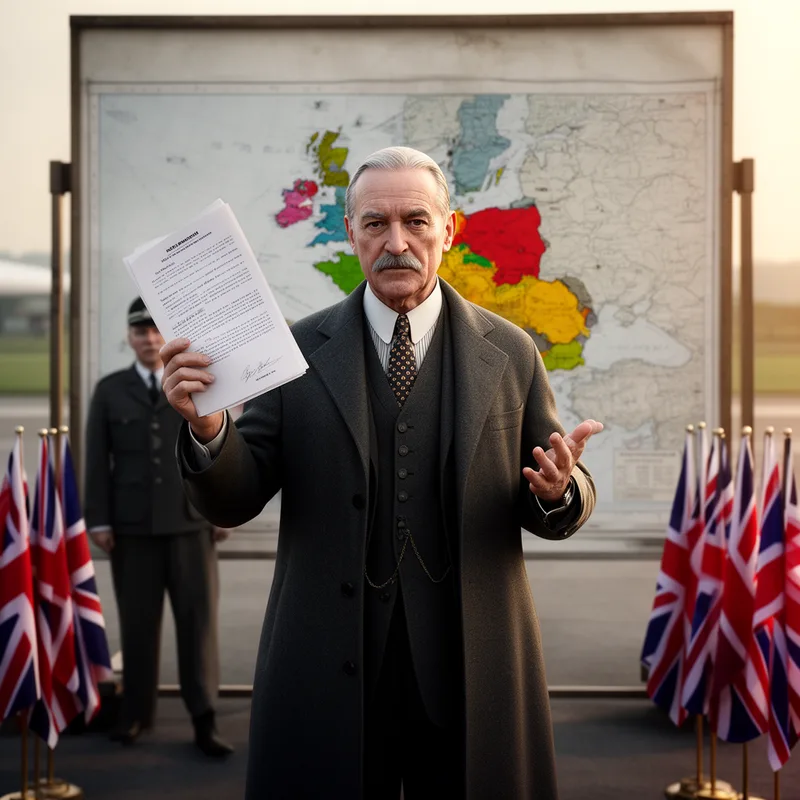
Neville Chamberlain
 4
7.5

- proper noun
- Neville Chamberlain was Prime Minister.
Examples
-
In 1938, Neville Chamberlain declared 'peace for our time'!
-
As Prime Minister, Neville Chamberlain tried to maintain peace in Europe through diplomatic negotiations.
-
Neville Chamberlain is often remembered for his "peace for our time" speech after the Munich Agreement.
-
Many historians debate whether Neville Chamberlain's appeasement policy delayed or hastened the outbreak of World War II.
-
"The British Prime Minister Neville Chamberlain is often remembered for his policy of appeasement during the 1930s."
-
"In his speeches, Neville Chamberlain emphasized the importance of diplomacy to avoid war with Germany."
-
"History textbooks frequently discuss Neville Chamberlain and the significant impact of his decisions before World War II."
Synonyms
 11
7.5
British Prime Minister before World War II who is known for trying to avoid war with Nazi Germany

 1
8.3
A British Prime Minister from 1937 to 1940 who tried to avoid war with Germany before World War II
Surface Forms
Morphology
Neville + Chamberlain
This is a proper name referring to a specific historical individual; personal names are arbitrary labels whose referent (a British prime minister known for appeasement before WWII) cannot be derived from the constituent words. Even if a learner knows the common-noun sense of 'chamberlain' (a court official) or the surname form, that knowledge does not allow them to infer the identity, dates, or political significance of Neville Chamberlain, so the expression is idiomatically referential and not compositional.
Etymology
Neville Chamberlain is the name of the British leader who, in 1938, agreed to give up part of Czechoslovakia to Germany and came home saying 'peace for our time'. Because he tried to avoid war by giving in to strong demands, his name today often stands for leaders who make big concessions to keep the peace.