
Nerita peloronta
- noun
- Specialized
 :
Nerita peloronta
:
Nerita peloronta
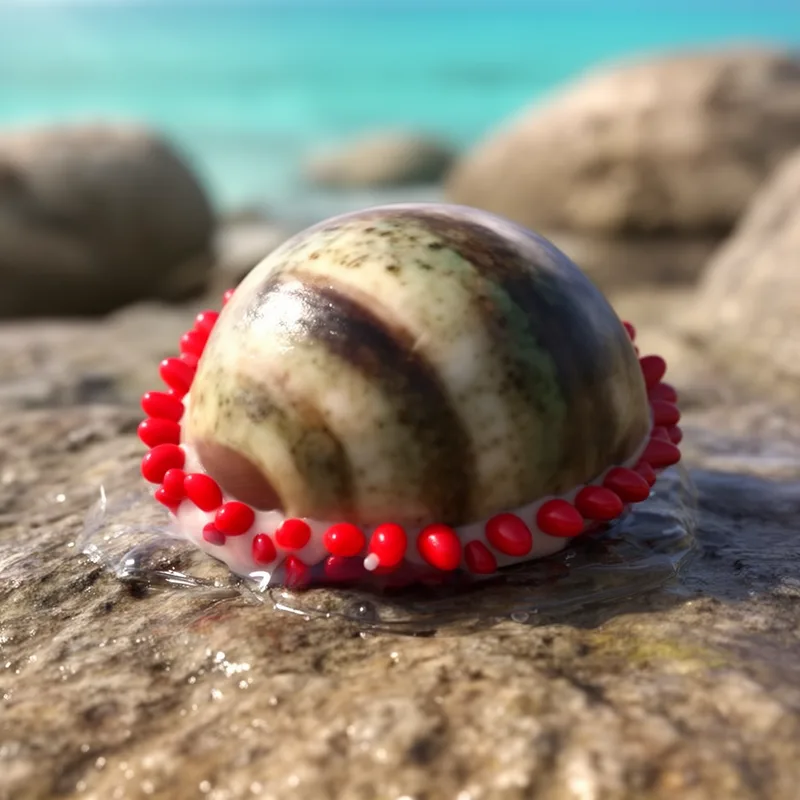
- Nerita peloronta is a marine snail known for its striking shell adorned with reddish projections around the opening.
Examples
-
Scientists collected several Nerita peloronta specimens to study their unique toothlike shell projections.
-
The Nerita peloronta can be found along rocky Caribbean shores, where its distinctive shell makes it easy to spot.
-
Nerita peloronta is prized by shell collectors for its beautiful coloration and unusual shell structure.
-
The Nerita peloronta is often found on rocky shores.
-
Have you ever seen a Nerita peloronta in the wild?
-
At low tide, you can often spot the Nerita peloronta clinging to the rocks along Caribbean coastlines.
-
The unique shell of the Nerita peloronta makes it a popular subject among marine biologists studying gastropod diversity.
Synonyms

A sea snail with red, tooth-like ridges at the shell opening
Surface Forms
Morphology
nerita + peloronta
Knowing 'Nerita' (a marine snail) allows a learner to infer that 'Nerita peloronta' names a particular kind of Nerita, so the basic category (a species of marine snail) is transparent. However, the specific epithet 'peloronta' is not a common English word (no dictionary definition provided) and does not transparently convey the distinctive traits (Caribbean range, shell features), so the full, detailed meaning is not predictable from the parts.
Etymology
Nerita peloronta comes from old names for sea snails: Nerita is a name for a small 'sea snail', and peloronta may come from a word meaning 'monstrous' or 'large' because of the shell's strong, toothlike rim. The name makes a clear picture of a little snail with reddish 'teeth' on its shell, so it helps you remember this species by its toothlike shell.

