
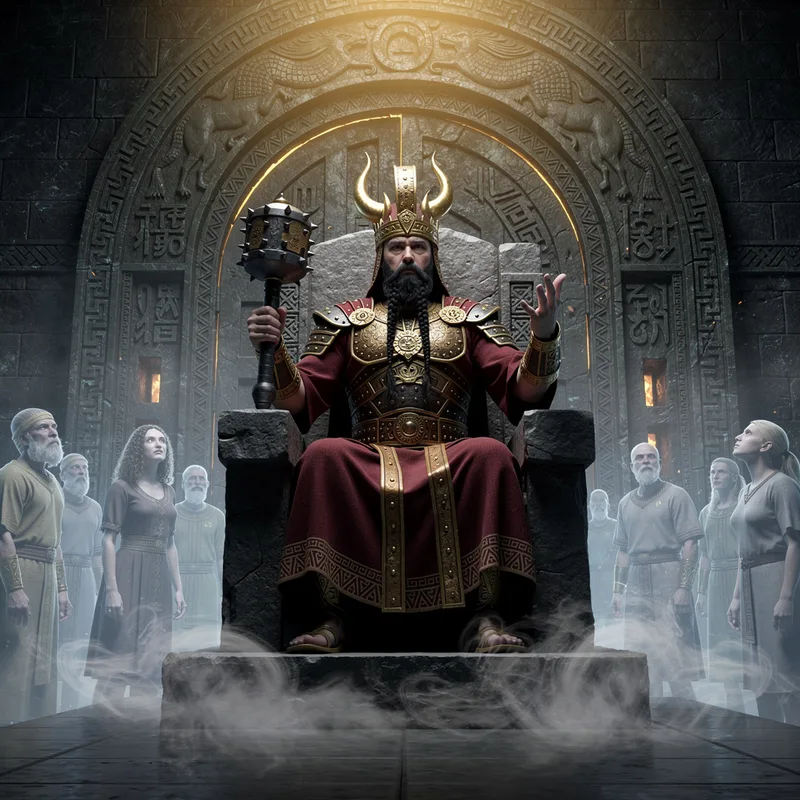
Nergal
 1
9.9

- proper noun
- Literature
- "Sammael, the desolate one, lord of the shadows... ...son of Nergal, hound of resurrection..."
- Nergal, god
- Nergal, god of war
Loading YouTube…
Watch on YouTubeAnd so he's described as going to rule in the underworld alongside Nergal, a very evil, wicked war God to be a positive counterpart.
- And so he's described as going to rule in the underworld alongside Nergal, a very evil, wicked war God to be a positive counterpart.
Examples
-
And so he's described as going to rule in the underworld alongside Nergal, a very evil, wicked war God to be a positive counterpart.
-
PHOTO (BLACK & WHITE): 26 Nergal, god of war, pestilence, and death, Old Babylonian style, ca. 1900-1750 B.C., Morgan 380
Academic text (1993) -
Son of Nergal, brother of--
-
PHOTO (BLACK & WHITE): 36 Kassite god, invocation to Nergal in the inscription, First Kassire Group, ca. 14th century B.C., Morgan 571
Academic text (1993) -
These figures, found in Old Babylonian contest scenes but not before, probably had a special meaning derived from the juxtaposition in the sky of the star picture of the goat, a representative of Gula, the goddess of healing, and of the monster with open mouth, a minion of Nergal.
Academic text (1993) -
Other Old Babylonian representations of major gods are rare, such as Nergal, god of war, pestilence, and death, shown in Figure 26 with one of his lion-headed demons and the suppliant goddess who addresses her prayer on behalf of the god's devotee.
Academic text (1993) -
PHOTO (BLACK & WHITE): 27 War god (Nergal?) facing a nude female; lion menacing a seated goat, possibly representing constellations, Old Babylonian style, ca. 1900-1750 B.C., Morgan 367.
Academic text (1993) -
Nergal is known in mythology as the Akkadian god who presides over the underworld.
-
In ancient texts, Nergal is depicted as a powerful deity associated with war and death.
-
Worshipers would often call upon Nergal to seek protection in battles, believing he ruled the realm of the dead.
Surface Forms
Etymology
Nergal comes from ancient Mesopotamia and his name probably means 'great lord' or 'mighty ruler'. He was a god of war, plague and the dead, so the name helps you remember him as a powerful ruler of destruction and the underworld.