

Nephelium lappaceum
- noun
- Specialized
- The Nephelium lappaceum tree is known for its unique spiky red fruit that is popular in tropical regions.
Examples
-
The Nephelium lappaceum tree can grow up to 20 meters tall.
-
The orchard includes several Nephelium lappaceum trees, which produce luscious rambutan fruit.
-
Farmers export Nephelium lappaceum to countries where the rambutan is considered a delicacy.
-
Scientists studied the growth patterns of Nephelium lappaceum in different soil conditions.
-
Have you ever tried Nephelium lappaceum?
-
Farmers export Nephelium lappaceum to countries where the spiny red fruit is a delicacy called rambutan.
-
The orchard includes several Nephelium lappaceum trees, which bear the sweet and juicy rambutan fruit.
Synonyms
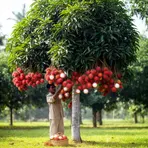
A tropical tree from Southeast Asia that gives spiny red fruit you can eat

A tropical tree that grows red, spiky fruit with sweet white flesh

A tropical tree from Southeast Asia that produces bright red, hairy fruit
Surface Forms
Morphology
Nephelium + lappaceum
This is a Latin binomial (taxonomic) name functioning as a label for a specific species; its meaning (the rambutan tree) is not compositionally built from English words. A B1 learner who knows 'Nephelium' and sees 'lappaceum' (an unattested/non‑English epithet) would not be able to derive the species identity or common meaning without prior botanical knowledge or exposure.
Etymology
Nephelium lappaceum names the tropical tree that produces the red, spiky fruit called rambutan. The common name 'rambutan' comes from Malay 'rambut' meaning 'hair', and the parts Nephelium and lappaceum point to that hairy, spiky fruit, so the name helps you picture the tree by its unusual, hair-like fruit.

