
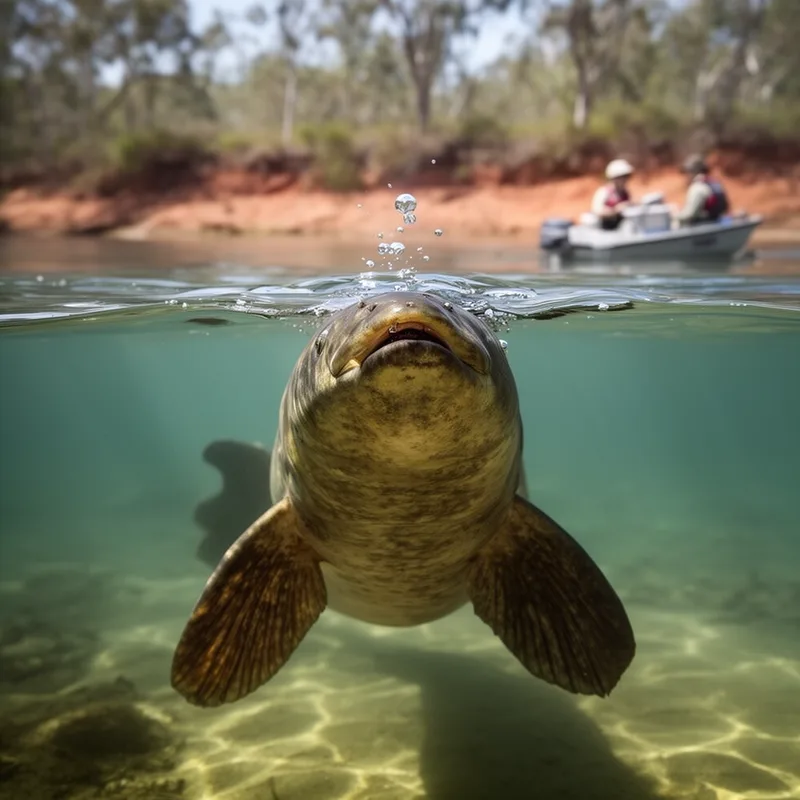
Neoceratodus forsteri
- noun
- Specialized
- Conservation efforts have increased to protect the endangered Neoceratodus forsteri in Queensland rivers.
Examples
-
The Neoceratodus forsteri is often referred to as a living fossil because of its ancient lineage.
-
Researchers are studying the Neoceratodus forsteri to learn more about the evolution of lungfish.
-
The Neoceratodus forsteri is a fascinating species.
-
Have you ever seen a Neoceratodus forsteri in the wild?
-
Conservation efforts have increased to protect the endangered Neoceratodus forsteri in Queensland rivers.
-
Researchers are studying the Neoceratodus forsteri to learn more about its unique adaptations for breathing air.
-
The Neoceratodus forsteri, often called a lungfish, has distinctive features that date back millions of years.
Synonyms
A rare endangered freshwater fish from Queensland rivers that breathes air with one lung

A large endangered freshwater fish from Queensland that breathes air and uses gills
Surface Forms
Morphology
Neoceratodus + forsteri
The first element Neoceratodus names a genus of Australian lungfishes, so a learner who recognises that can infer this phrase labels a particular species within that genus. However, the second element forsteri is a non‑lexical commemorative epithet that carries no independent descriptive meaning, and details like endangered status or native range are not derivable from the parts alone, making the expression only partially predictable.
Etymology
Neoceratodus forsteri comes from parts that mean 'new' and 'horn-tooth': neo ('new') and ceratodus ('horn-tooth'), so imagine a fish with strong, horn-like teeth. It is called forsteri after a scientist, and that name helps you remember this air-breathing 'lungfish' that looks like a 'living fossil'.

