
Nazirite


 1
9.9
- noun
- /ˈnæzəˌraɪt/
- Archaic
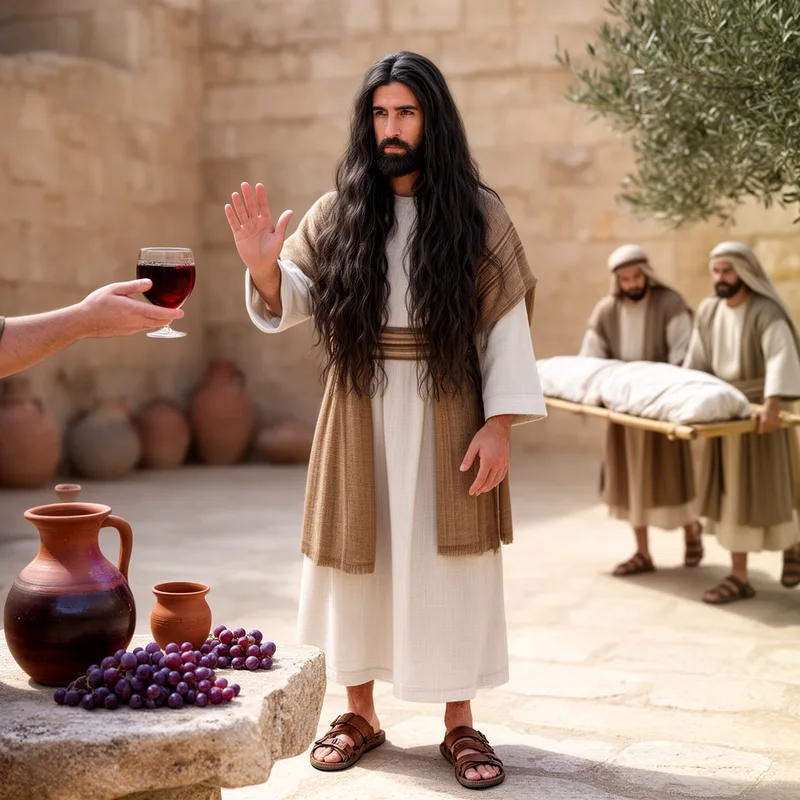
- In ancient Israel, a Nazirite was someone who took a vow to abstain from wine and avoid cutting their hair.
- become a Nazirite
- attitudes toward the Nazirite
- Jewish Nazirite
Examples
-
The Jewish ascetic is referred to as a Nazirite.
Academic text (2018) -
The question of why the Nazirite has chosen his temporary way of life is never broached in the Hebrew Bible.
Academic text (2018) -
The description provided by the Bible suggests equal opportunity: the Nazirite may be "either man or woman."
Academic text (2018) -
Here we are presented with a return of sorts to the positive view of the Nazirite, which had been characteristic of the Bible.
Academic text (2018) -
The rabbis are ambivalent in their attitude toward the Nazirite.
Academic text (2018) -
Another point to make a note of is that Nazirites in the Biblical period were apparently seen in a positive light and even considered on a par with prophets.
Academic text (2018) -
Thus, Nachmanides sees the Nazirite in a very positive light, comparing him to a saint and a prophet (Nachmanides' Numbers 6:14).
Academic text (2018) -
Rabbinic literature, by contrast, preserves a statement that specifies when one should become a Nazirite; the connection is to ethical-social degradation.
Academic text (2018) -
According to this approach, abstinence is in itself a blessed thing, crowning the Nazirite as a holy man, as borne out by the fact that even the Torah contains a passage associating sanctity with people who take Naziriteship upon themselves.
Academic text (2018) -
Samson was known as a famous Nazirite because he never cut his hair as part of his religious vows.
Synonyms
 1
9.9
A person in ancient Israel who vowed not to drink wine and not to cut their hair
Surface Forms
Morphology
Nazirite = nazir + ite
The form is a borrowing (Hebrew nazir) with the productive suffix -ite, but the base is a specialized loanword unfamiliar to most learners, so the meaning is not derivable by a B1 learner from component parts.
Etymology
Nazirite comes from the Hebrew word nazir, which means 'separated' or 'set apart', similar to the English word 'separate'. So a Nazirite was a person set apart by a special vow who avoided wine, did not cut their hair, and stayed away from the dead.