
Nautilidae
- noun
- /ˌnɔːtɪˈliːdə/
- Specialized
- Unlike most modern cephalopods, living Nautilidae still have external shells.
Examples
-
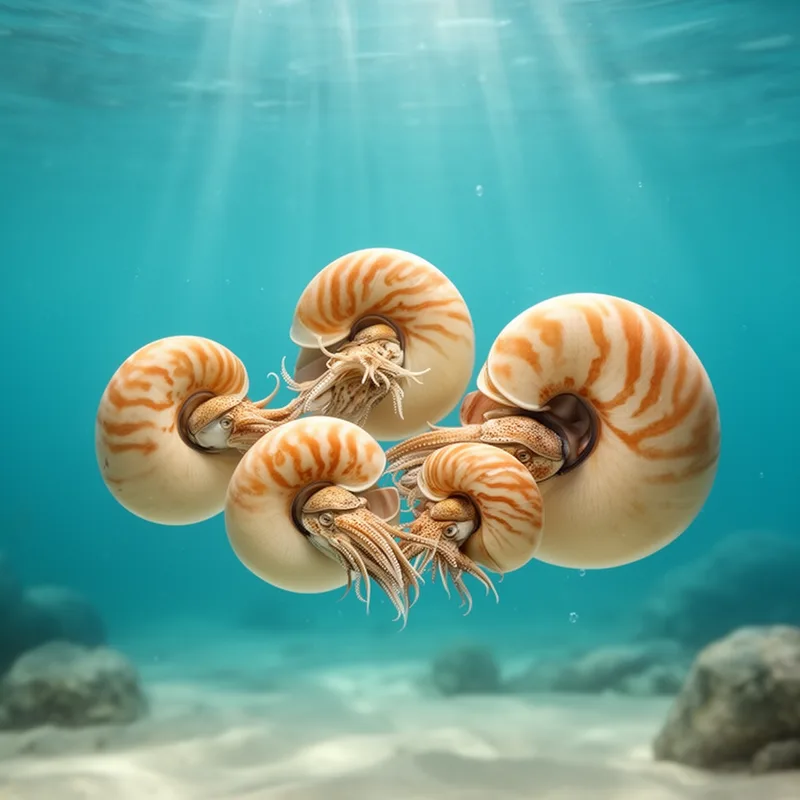
The Nautilidae are known for their beautiful, spiral shells found in tropical oceans.
-
Scientists study Nautilidae fossils to understand the evolution of cephalopods.
-
The Nautilidae family includes fascinating marine creatures.
-
Did you know that Nautilidae are often called living fossils?
-
Scientists study Nautilidae fossils to understand the evolution of cephalopods.
-
The Nautilidae are known for their beautiful, spiral shells found in tropical oceans.
-
Unlike most modern cephalopods, living Nautilidae still have external shells.
Surface Forms
Morphology
Nautilidae = nautilus (semi-transparent) = nautil + idae
The stem refers to the familiar English noun 'nautilus', but the suffix '-idae' is a specialized taxonomic ending that is not transparent to average learners.
Etymology
The word Nautilidae comes from the Greek nautilus meaning 'sailor' and the scientific ending -idae meaning 'family'. Think of the nautilus as a small sea 'ship' with a spiral shell, and notice the root naut- in words like nautical and astronaut — this image helps explain why the name fits these spiral-shelled sea animals.

