
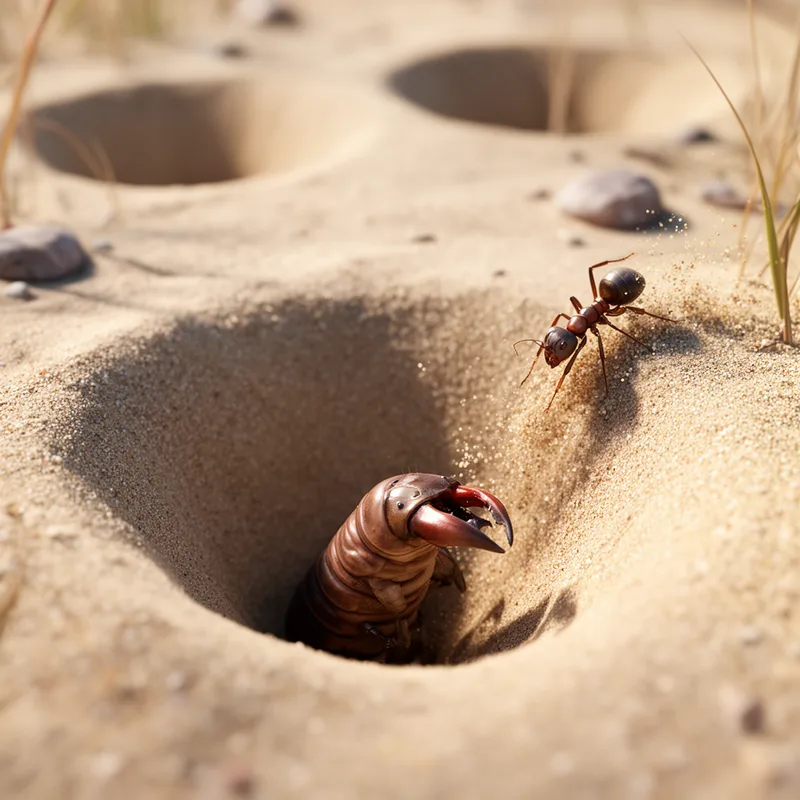
Myrmeleon
9.9
An insect whose young dig small sand pits to trap and eat other insects
- noun
- /ˌmɪr.məˈliː.ɒn/
- Specialized
:
Myrmeleon
- Researchers observed several Myrmeleon larvae constructing pit traps in the sandy soil.
Examples
-
The distinctive wing patterns of Myrmeleon adults help to differentiate them from related genera.
-
The genus Myrmeleon includes some of the best-known species of antlions.
-
The Myrmeleon is fascinating to observe.
-
Many Myrmeleons are found in sandy areas.
-
Researchers observed several Myrmeleon larvae constructing pit traps in the sandy soil.
-
The genus Myrmeleon includes some of the best-known species of antlions.
-
Many Myrmeleon species are found in sandy areas where they can build their traps.
Surface Forms
Myrmeleon singular
Myrmeleons plural
Etymology
Myrmeleon comes from old Greek parts myrmex ('ant') and leon ('lion'), so it literally means 'ant-lion'. This gives a strong image: the insect's larvae dig sand pits to catch ants, like a tiny 'lion' hunting its prey.

