
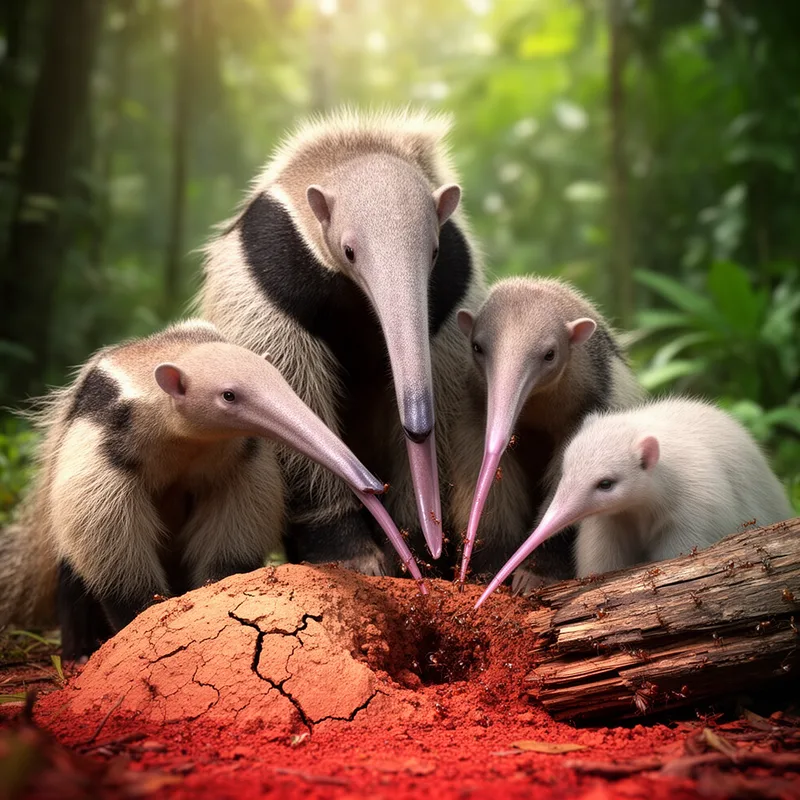
Myrmecophagidae
- noun
- /ˌmɜr.mɪ.kəˈfɑː.gɪˌdeɪ/
- Specialized
- The family Myrmecophagidae includes several species adapted to feeding on ants and termites.
Examples
-
Members of Myrmecophagidae are easily recognized by their elongated snouts and tongues.
-
The Myrmecophagidae family includes several species of anteaters.
-
Researchers discovered a new fossil belonging to the Myrmecophagidae in South America.
-
Did you know that the Myrmecophagidae have long tongues?
-
The family of mammals known as Myrmecophagidae has evolved specialized features for consuming ants and termites.
-
One characteristic of the Myrmecophagidae is their long and sticky tongues, perfect for catching insects.
-
Scientists study the Myrmecophagidae to understand their unique adaptations for a diet primarily consisting of ants and termites.
Synonyms

 2
2.0
2
2.0

A mammal from Central and South America with a long snout and tongue that eats ants and termites

A tropical American animal with no teeth that eats ants and termites
Surface Forms
Etymology
The word Myrmecophagidae comes from old Greek parts: myrmeco- meaning 'ant' and -phagidae from a word meaning 'to eat'. So the name literally means 'ant-eaters', which is why it is used for the family of anteaters.