
Mycetophylidae
- noun
- /maɪˌsɛtəˈfɪlɪdi/
- Specialized
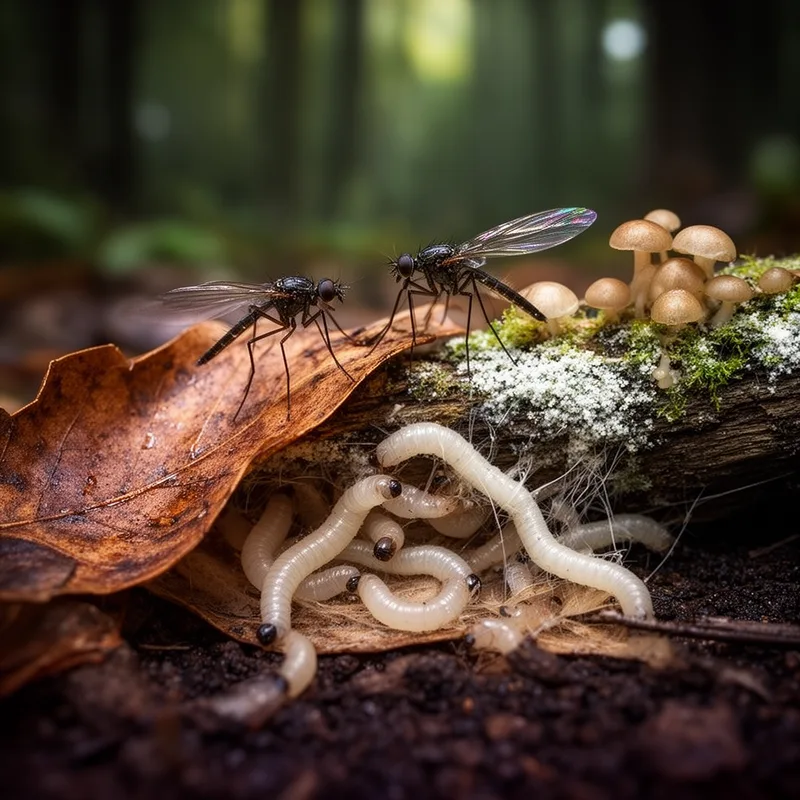
- The Mycetophylidae family includes many species of fungus gnats.
Examples
-
The larvae of the Mycetophylidae typically feed on decaying plant material and fungi.
-
Scientists discovered several new species within the Mycetophylidae during the rainforest expedition.
-
Members of the Mycetophylidae are often mistaken for mosquitoes due to their delicate appearance.
-
Did you know that Mycetophylidae larvae often thrive in damp environments?
-
The larvae of Mycetophylidae are known for feeding on various types of fungi in forest habitats.
-
Entomologists study the Mycetophylidae to understand their role in decomposition and the ecosystem.
-
Researchers are investigating how climate change affects the populations of Mycetophylidae in wetland areas.
Surface Forms
Morphology
Mycetophylidae = Mycetophila (opaque) = mycetophil + idae
The term is a specialized scientific family name built from a non-standalone combining form ('mycetophil') plus the taxonomic suffix '-idae', which is not transparent to average learners.
Etymology
Mycetophylidae comes from Greek parts meaning 'fungus' (mycet-) and 'loving' (phil-). The ending -idae marks an animal family, so the name describes a family of small flies that 'love' fungi, which fits because their larvae feed on fungi.

