
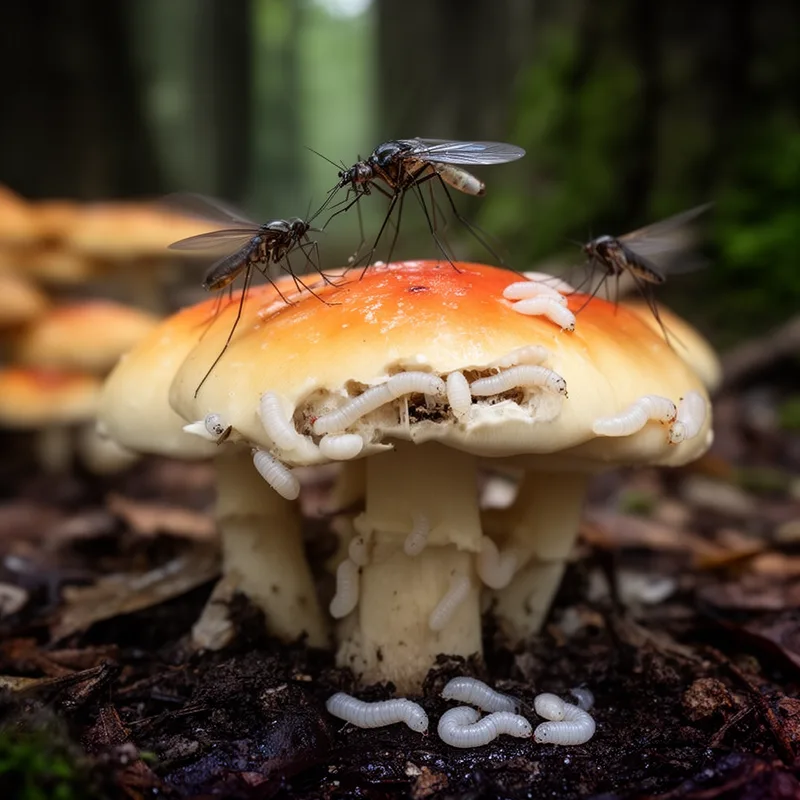
Mycetophilidae
- noun
- /maɪˌsɛtəˈfɪlɪˌdeɪ/
- Specialized
- The Mycetophilidae family includes many species of fungus gnats.
Examples
-
The Mycetophilidae are commonly encountered in damp woodlands where fungi abound.
-
Many species within the Mycetophilidae family are important in the life cycle of forest mushrooms.
-
Entomologists study the Mycetophilidae because of their ecological role in decomposing fungi.
-
Have you ever seen a Mycetophilidae in the garden?
-
Entomologists study the Mycetophilidae because of their ecological role in decomposing fungi.
-
Many species within the Mycetophilidae family are important in the life cycle of forest mushrooms.
-
The Mycetophilidae are commonly encountered in damp woodlands where fungi abound.
Synonyms


 1
7.5
A small dark fly whose young eat mushrooms and can damage plant roots
Small flies called fungus gnats have young that eat fungi and rotting plant material
Surface Forms
Morphology
Mycetophilidae = Mycetophila (opaque) = myceto + phil + idae
Formed from specialized Greek combining forms plus the technical zoological family suffix '-idae', which is not transparent or productive for general learners.
Etymology
Mycetophilidae comes from parts that mean myceto- 'fungus', -phil- 'loving', and -idae 'family'. So it literally means a 'fungus-loving family', which fits these small flies, known as fungus gnats, whose young feed on fungi.