
Mya
 1
9.9
1
9.9

- noun
- Specialized
- Or the Chicxulub impact (if it wasn't the Indian Deccan traps supervolcano) 65 MYA, which did in the non-avian dinosaurs.
Examples
-
The fossil known as Mya is commonly found in coastal marine environments.
-
Ambulocetids lived in coastal environments such as bays and estuaries approximately 49 million years ago (mya) and are known only from India and Pakistan.
Academic text (2001) -
Day 6 was 65 mya to about 50,000 years ago.
Blog text (32) -
Remingtonocetids probably lived between 49 mya and 43 mya.
Academic text (2001) -
Day 4 was 650 to 543 mya, possibly with first land plants.
Blog text (32) -
Day 5 was 543 to 65 mya with the Cambrian explosion.
Blog text (32) -
Estimates of geological age of fossils are presented as millions of years ago (mya).
Academic text (2002) -
Other arrows indicate hypothesized routes of dispersal, with times estimated as mya.
Academic text (2002) -
By 1.6 MYA, Homo erectus had appeared in the fossil line and was the first human stock to disperse out of Africa.
Academic text (1995) -
Basilosauridae and Dorudontidae reached their highest diversity in the late middle Eocene, around 35 mya.
Academic text (2001)
Synonyms

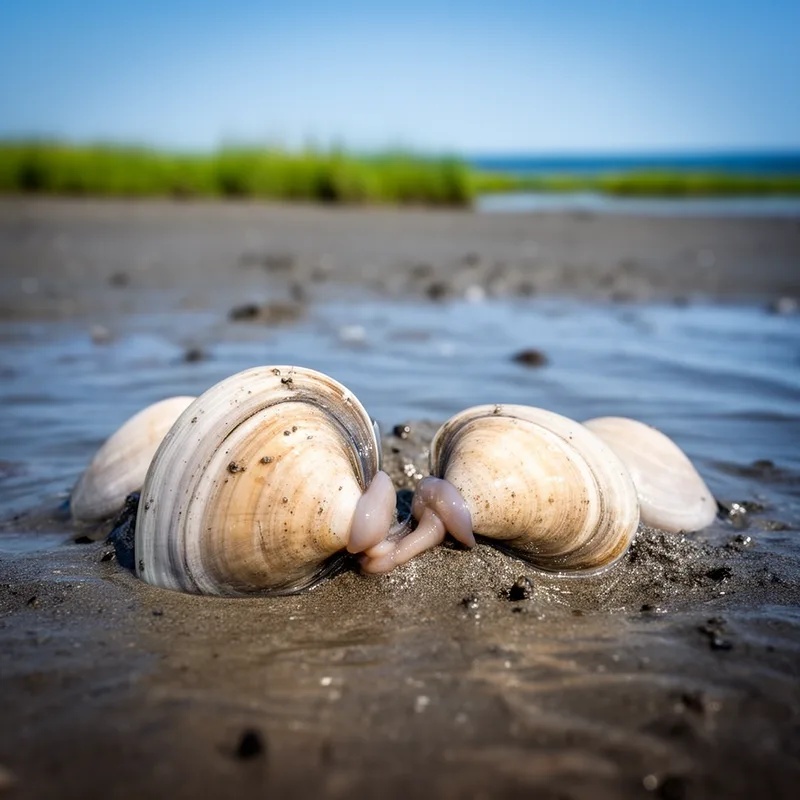
A group of sea clams including the soft-shell clam
Compounds

- Specialized
An edible clam with a thin oval shell that lives on coasts and is called the soft-shell clam
Surface Forms
Etymology
Mya is the scientific name for a group of soft-shell clams. It likely comes from an old Greek word meaning 'mussel' or 'shellfish', so a helpful way to remember Mya is to think of it as the simple name for this kind of clam.