
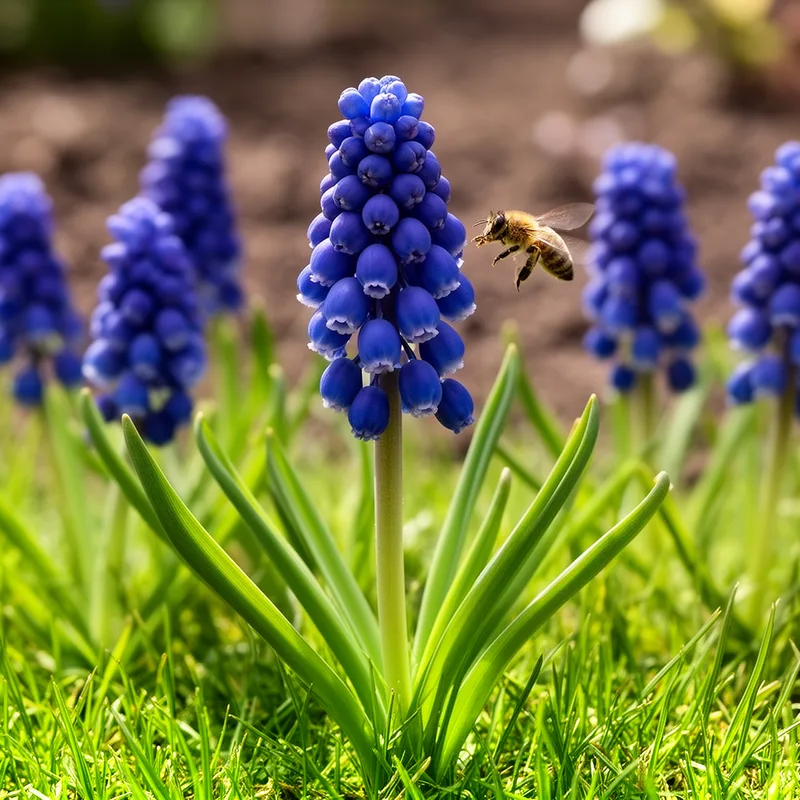
Muscari neglectum
- noun
- Specialized
- Gardeners often plant Muscari neglectum to add early color to flower beds.
Examples
-
The dark blue flowers of Muscari neglectum attract bees and other pollinators.
-
Every spring, clusters of Muscari neglectum bloom vibrantly in her garden.
-
Look at that Muscari neglectum!
-
The garden was filled with beautiful Muscari neglectum.
-
Every spring, clusters of Muscari neglectum bloom vibrantly in her garden.
-
Gardeners often plant Muscari neglectum to add early color to flower beds.
-
The dark blue flowers of Muscari neglectum attract bees and other pollinators.
Surface Forms
Morphology
Muscari + neglectum
This is a taxonomic Latin binomial: the combination of a genus name (Muscari) plus a species epithet simply identifies a particular species, so a learner who knows 'Muscari' can at least recognise it as a type of Muscari plant. However, the second element 'neglectum' is a Latin form (not an English word and here listed as not found), so any descriptive nuance is not transparently derivable by a B1 learner; the name thus signals species membership but not transparent meaning beyond that.
Etymology
Muscari neglectum may come from old words meaning 'musk' and 'neglected'. Muscari points to a faint sweet smell some grape hyacinths have and neglectum means 'forgotten' because this small, deep-blue flower often grows wild and is easy to miss.

