
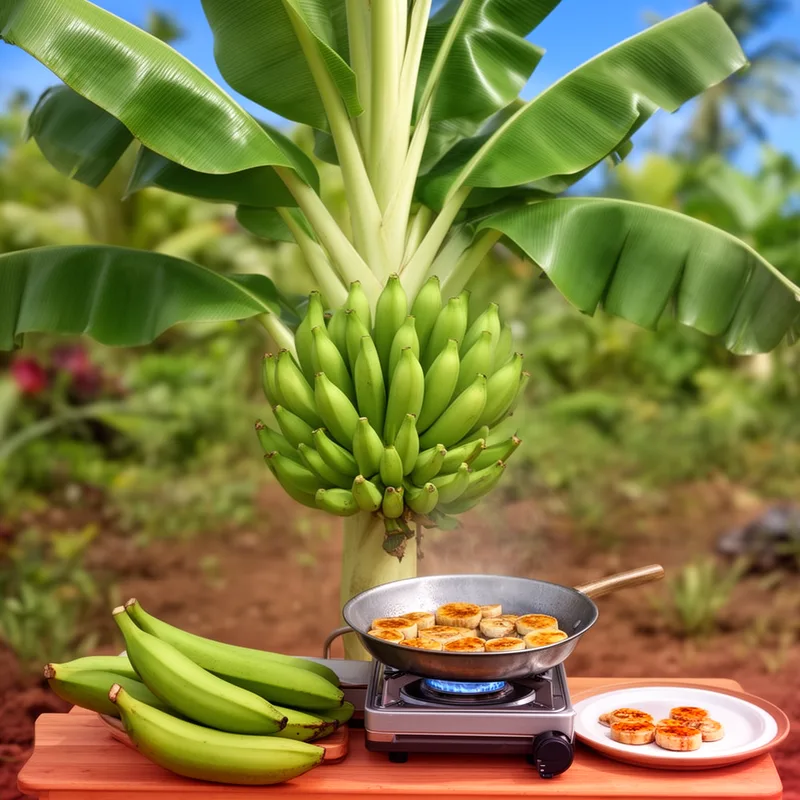
Musa paradisiaca
- noun
- Specialized
- The fruits of Musa paradisiaca can be cooked and eaten much like plantains.
Examples
-
In tropical gardens, Musa paradisiaca is often cultivated for its starchy fruits.
-
Many farmers cultivate Musa paradisiaca for its edible fruits.
-
Scientists studied the genetic diversity of Musa paradisiaca in different regions.
-
The Musa paradisiaca is often grown in tropical gardens.
-
In tropical gardens, Musa paradisiaca is often cultivated for its starchy fruits.
-
Many farmers cultivate Musa paradisiaca for its edible fruits.
-
The fruits of Musa paradisiaca can be cooked and eaten much like plantains.
Synonyms

 11
4.1
11
4.1

A tropical fruit like a banana that is starchy and usually cooked

A tropical tree that grows large starchy fruits like bananas that are often cooked before eating
A plant that grows the bananas people eat
Surface Forms
Morphology
Musa + paradisiaca
The form is a scientific binomial: 'Musa' clearly names the banana genus so a learner who knows that word can infer it refers to a kind of Musa (i.e. a banana plant). However, 'paradisiaca' is a Latin species epithet that is not transparently interpretable by a B1 learner and does not on its own convey the specific sense 'edible, starchy banana' without background in taxonomic naming. Because part of the meaning (genus = banana) is recoverable but the full lexical sense requires domain knowledge, the expression is only partially transparent.
Etymology
Musa paradisiaca is a Latin name that means 'banana of paradise': Musa is the old word for banana and paradisiaca means 'from paradise'. Early explorers thought these lush, tasty plants looked like a piece of paradise, so the name now refers to this species of banana or plantain.