
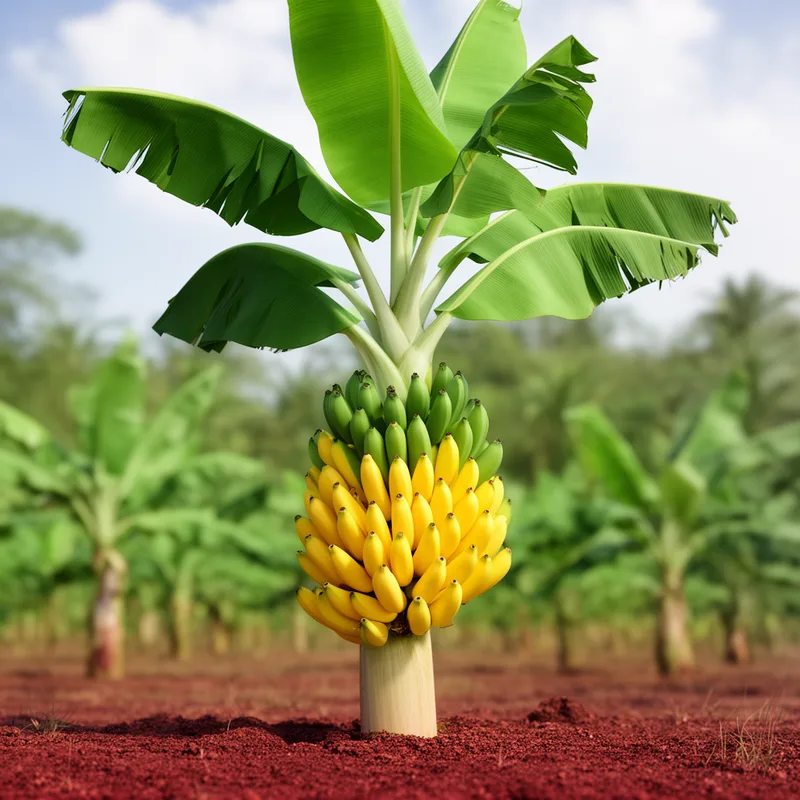
Musa paradisiaca sapientum
- noun
- Specialized
- The Musa paradisiaca sapientum is known for its sweet, yellow fruit.
Examples
-
The commercial cultivation of Musa paradisiaca sapientum has expanded rapidly in tropical regions.
-
Farmers in Ecuador grow Musa paradisiaca sapientum for export.
-
Many varieties of edible bananas are derived from Musa paradisiaca sapientum hybrids.
-
Scientists study Musa paradisiaca sapientum to improve fruit yield and disease resistance.
-
Farmers in Ecuador cultivate Musa paradisiaca sapientum primarily for its delicious, edible yellow fruit.
-
The commercial farming of Musa paradisiaca sapientum has been increasing due to the high demand for bananas.
-
In tropical climates, Musa paradisiaca sapientum plants thrive and produce large bunches of bananas.
Synonyms

A type of banana grown for its soft, sweet yellow flesh

A banana plant that grows in warm places and produces starchy fruits you can cook
Surface Forms
Morphology
Musa + paradisiaca + sapientum
This is a Latin botanical name rather than a compositional English phrase: although 'Musa' is glossed as a plant genus, the other elements are Latin forms (not standard English words) and are not found in the learner dictionary. Scientific Latin names function as conventional labels whose meaning (a particular banana species) cannot be derived by a B1 learner from the constituent parts, so the expression is not predictable from its elements.
Etymology
Musa paradisiaca sapientum comes from Latin words that create a clear image. The part Musa means 'banana', paradisiaca means 'from paradise', and sapientum means 'of the wise', so the name points to a prized, edible banana plant used for food.

