

Musa basjoo
- noun
- Specialized
- Gardeners often plant Musa basjoo for its tropical appearance rather than for fruit.
Examples
-
The Musa basjoo thrived in the garden, producing lush green leaves even in cool temperatures.
-
Gardeners love to grow Musa basjoo for its lush leaves.
-
Because Musa basjoo is hardy, it can survive winters in regions cooler than typical banana species.
-
The Musa basjoo is often used as an ornamental plant.
-
Many landscapers choose to use Musa basjoo in their designs due to its striking foliage.
-
With its impressive height and large leaves, Musa basjoo adds a tropical vibe to any garden.
-
Homeowners often plant Musa basjoo around their patios to create a lush, exotic atmosphere.
Synonyms
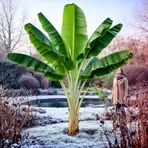
A garden plant with large tropical leaves that survives cool winters
Surface Forms
Morphology
Musa + basjoo
The form combines the genus name 'Musa' (banana plants) with a species epithet, so a learner who knows 'Musa' could infer this refers to a kind of banana plant. However, 'basjoo' is an opaque proper/species name and botanical binomial conventions (and the specific senses like ornamental use or native range) are not predictable for a B1 learner, so the meaning is only partially inferable.
Etymology
Musa basjoo mixes the Latin word Musa for bananas and a Japanese name basjoo, so it literally points to a 'Japanese banana'. That's why Musa basjoo is grown for its big tropical leaves and because it can survive cooler weather, not for eating.

