
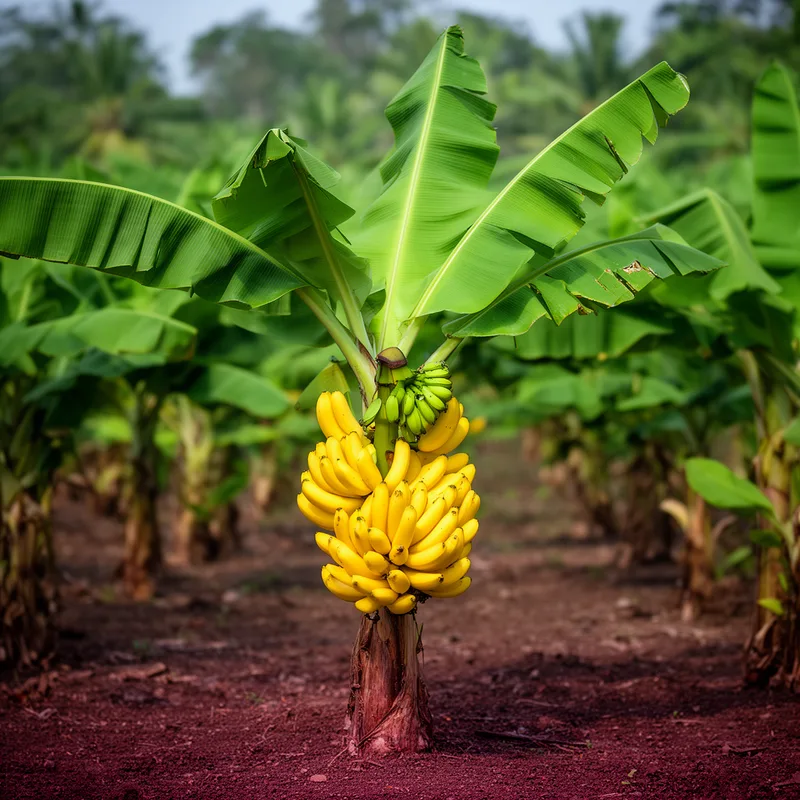
Musa acuminata
- noun
- Specialized
- The commercial bananas found in most supermarkets are usually derived from Musa acuminata.
Examples
-
In many tropical regions, Musa acuminata is a staple food.
-
Researchers study Musa acuminata to improve disease resistance in banana crops.
-
The plantation specialized in growing Musa acuminata for export.
-
The Musa acuminata is known for its sweet bananas.
-
The commercial bananas found in most supermarkets are usually derived from Musa acuminata.
-
In many tropical regions, Musa acuminata is a staple food.
-
The plantation specialized in growing Musa acuminata for export.
Synonyms

 123
1.0
123
1.0

A tall tropical plant with large leaves that grows clusters of fruit
 3
1.4
3
1.4
A large tropical plant that grows bananas

A small banana tree that grows near the ground and makes sweet yellow fruit

A type of banana grown for its soft, sweet yellow flesh
Surface Forms
Morphology
Musa + acuminata
This is a scientific Latin binomial (genus + species). Even if a learner knows 'Musa' as a plant genus, the epithet 'acuminata' is Latin/technical and not a common English word, so the specific sense ‘a cultivated banana species with edible yellow fruit’ cannot be derived from ordinary constituent meanings. Scientific names are domain-specific and do not follow everyday English compositional patterns, so the overall meaning is not predictable to a B1 learner.
Etymology
Musa acuminata may come from an old word for 'banana', with Musa coming from that old word and acuminata meaning 'pointed' in Latin. So the name paints the picture of a banana plant with long, pointed leaves and fruit, which explains why it names the edible banana we eat today.