
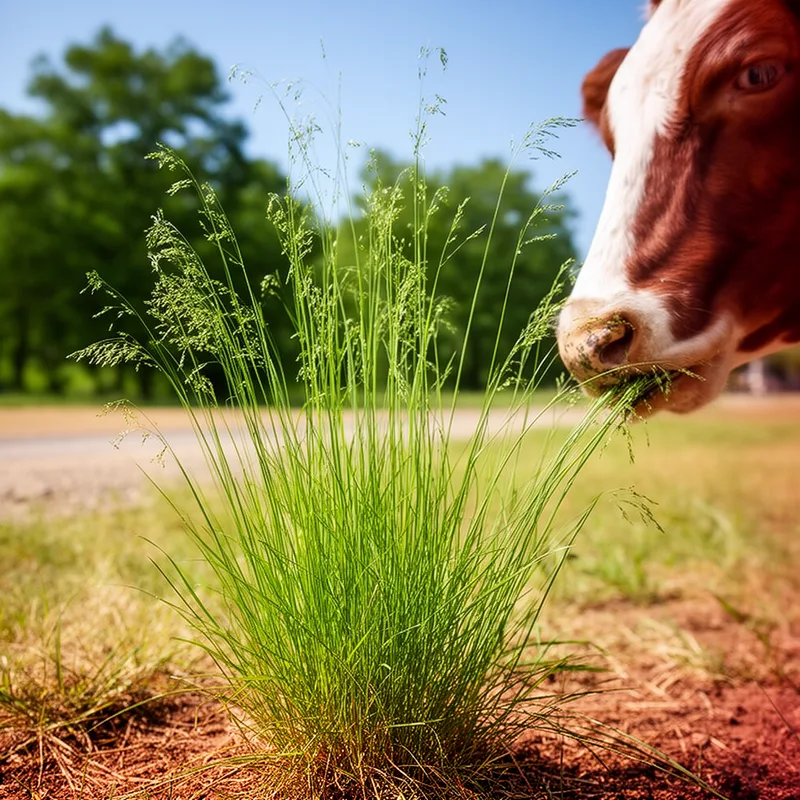
Muhlenbergia schreberi
- noun
- Specialized
- Farmers sometimes use Muhlenbergia schreberi as a supplementary grazing grass for livestock.
Examples
-
Botanists identified a healthy patch of Muhlenbergia schreberi thriving near the creek bank.
-
Muhlenbergia schreberi grows widely in open woods and along roadsides throughout the central United States.
-
The Muhlenbergia schreberi grows well in sandy soils.
-
Farmers often cultivate Muhlenbergia schreberi for grazing.
-
Muhlenbergia schreberi provides a valuable food source for livestock, especially in the central United States.
-
Many ranchers prefer to let their cattle graze on Muhlenbergia schreberi during the summer months.
-
Muhlenbergia schreberi is commonly found in fields and pastures where livestock graze.
Synonyms


 1
9.9
A thin grass from the central United States with fine stems that cattle sometimes eat
Surface Forms
Morphology
Muhlenbergia + schreberi
This is a Linnaean binomial: if a learner knows 'Muhlenbergia' as a genus of grass and understands that a following epithet names a particular species, they can infer the phrase denotes a specific grass of that genus. However, the species epithet 'schreberi' is an arbitrary/eponymic label with no descriptive lexical meaning, so the fine-grained properties (slender, branching, grazing value) are not inferable from the parts.
Etymology
Muhlenbergia schreberi may come from two people: the genus Muhlenbergia was named for a U.S. plant scientist called Muhlenberg, and the species part schreberi honours a German naturalist named Schreber. So this 'scientific name' links the grass to those two plant experts and is why we use that long name today.