
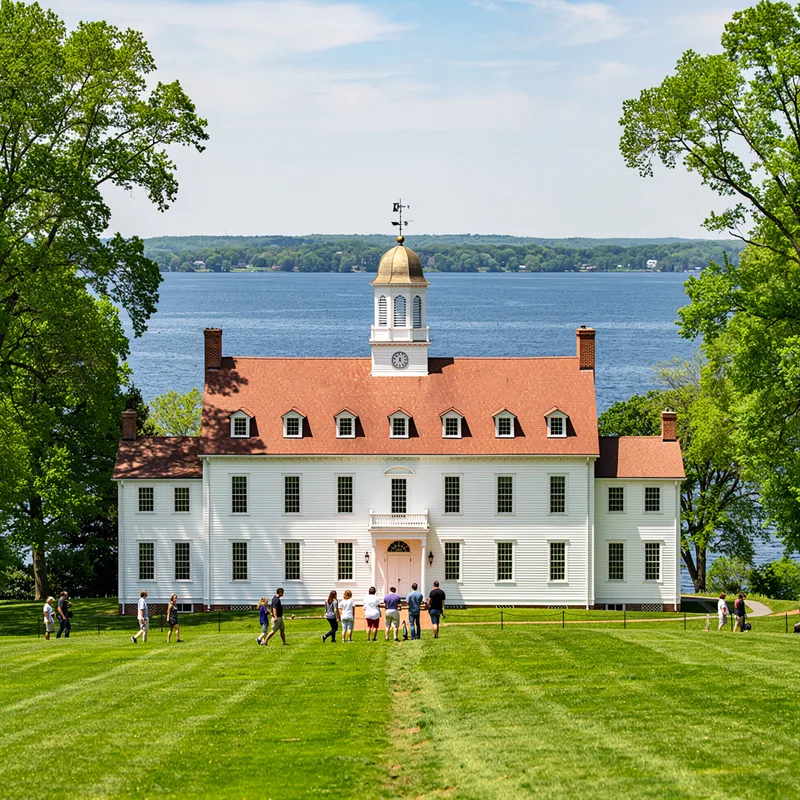
Mount Vernon
 18
3.7

- proper noun
- /maʊnt ˈvɜrnən/
- You can take a guided tour of Mount Vernon to learn more about George Washington's life.
- Mount Vernon estate
- Washington's Mount Vernon
- home at Mount Vernon
Examples
-
1761 - Washington inherits Mount Vernon following the death of Lawrence Washington's widow, his brother's wife.
Fiction book (2001) -
He thoroughly enjoyed retirement at Mount Vernon, and he sincerely doubted his ability to fill the office successfully.
Academic text (1997) -
This is the train to Mount Vernon, right?
-
"We're all set for Mount Vernon," he said.
Fiction book (2001) -
Mount Vernon train will be leaving in three minutes, Track 8.
-
In his will, he directed that he be buried on his beloved Mount Vernon estate.
Fiction book (2001) -
George Washington died in the master bedroom at Mount Vernon on December 14, 1799.
Fiction book (2001) -
I've never been to Mount Vernon.
Fiction book (2001) -
George Washington's Mount Vernon was the first house in North America to incorporate a lawn as part of the landscape design.
Blog text (24) -
The Mount Vernon tomb, jointly guarded by Confederate and Union soldiers, was neutral ground during the American Civil War.
Academic text (1997)
Surface Forms
Morphology
mount + Vernon
The specific meaning 'the former plantation home of George Washington' cannot be derived from the constituents: 'mount' (a hill) and 'Vernon' (a name). At best a learner might guess it is a place name, but they would not predict the historic/house/plantation sense from the parts alone, so the expression is idiomatic as a proper name and unpredictable.
Etymology
Mount Vernon was named by Lawrence Washington for Admiral Vernon, a British naval hero he admired, and he added Mount to make the house sound grand. The name stayed with George Washington's farm, so today Mount Vernon means his famous family home rather than a real mountain.