
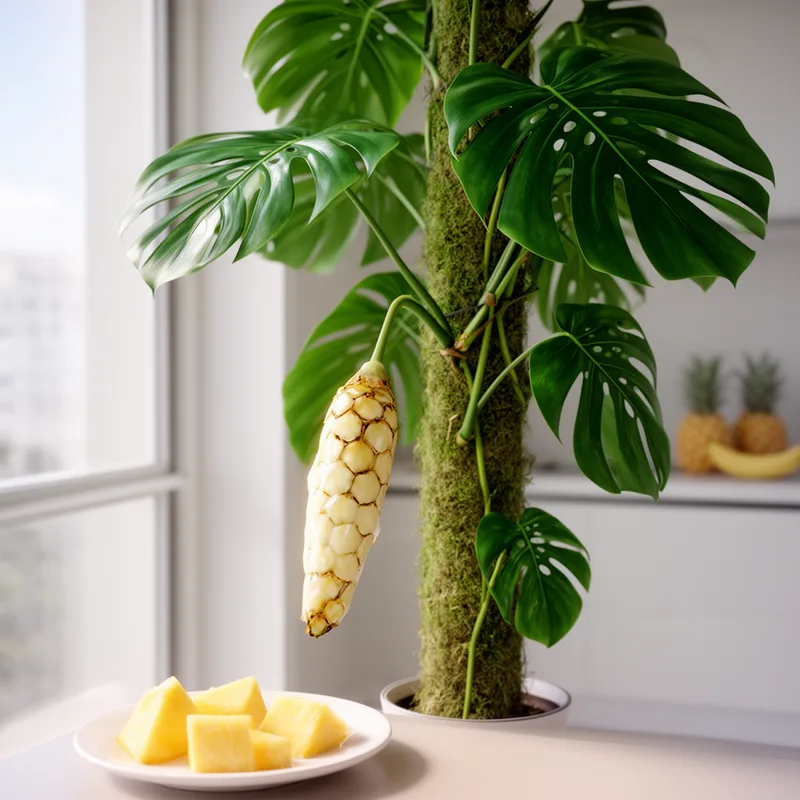
Monstera deliciosa


 1
7.7
- noun
- /mɒnˈstɛrə dɪˈliːʃəs/
- Specialized
- Many people do not realize that the fruit of the Monstera deliciosa is actually edible when ripe.
Examples
-
The Monstera deliciosa is prized for its dramatic split leaves in stylish home decor.
-
She placed her new Monstera deliciosa near the window to ensure it got enough sunlight.
-
The Monstera deliciosa is a popular houseplant.
-
I bought a Monstera deliciosa from the local nursery.
-
Many people do not realize that the fruit of the Monstera deliciosa is actually edible when ripe.
-
The Monstera deliciosa is prized for its dramatic split leaves in stylish home decor.
-
I bought a Monstera deliciosa from the local nursery because I love its unique foliage.
Synonyms
 1
9.9
A tropical fruit with a sweet pineapple and banana flavor
A tropical climbing plant with roots in the air that produces fruit tasting like pineapple and banana
Surface Forms
Morphology
Monstera + deliciosa
Partly transparent: 'Monstera' names a plant genus and 'deliciosa' is clearly interpretable as Latin/Spanish for 'delicious', so a learner who knows both constituents could infer this refers to a (tasty) plant or one with edible/delicious fruit. However, the full, conventionalized meaning as a specific tropical vine with perforated leaves and a pineapple/banana-like fruit is encyclopedic and not fully predictable from the binomial form, so the expression is only partially compositional.
Etymology
Monstera deliciosa comes from old Latin words that mean 'monster' and 'delicious'. Monstera refers to the plant's big, split leaves with holes that look strange, and deliciosa refers to its tasty ripe fruit, so the name helps you remember both the leaves and the edible fruit.