
Monroe Doctrine
 2
7.9
2
7.9

- noun
- /mənˈroʊ ˈdɒktrɪn/
- Our "entanglements" in foreign quarrels had begun early with the War of 1812, continued with the Monroe Doctrine, involvement in Spanish colonial affairs, and confrontation with Britain over Venezuela shortly before we went to war with Spain at the end of the last century.
- Corollary to the Monroe Doctrine
Examples
-
Students studied the Monroe Doctrine as a pivotal moment in American foreign policy during their history class.
-
Historians debate the long-term effects of the Monroe Doctrine on U.S. relations with Latin America.
-
Open our history books, read up on the Monroe Doctrine, and abide by it.
Blog text (6) -
A Cold War corollary to the Monroe Doctrine centered on United States attempts to keep the Soviet Union out of Latin America.
Academic text (1993) -
Second, the evolution of the United States' concept of canal defense parallels perceived historical threats within the framework of the Monroe Doctrine.
Academic text (1993) -
As president, he reaffirmed and expanded the Monroe Doctrine not only to bar European meddling in the Americas but also to justify intervention by the United States throughout the Western Hemisphere.
Academic text (2002) -
In 1846, an American diplomat, invoking the Monroe Doctrine, signed a treaty with Colombia guaranteeing the United States exclusive rights of transit across the isthmus.
Academic text (1992) -
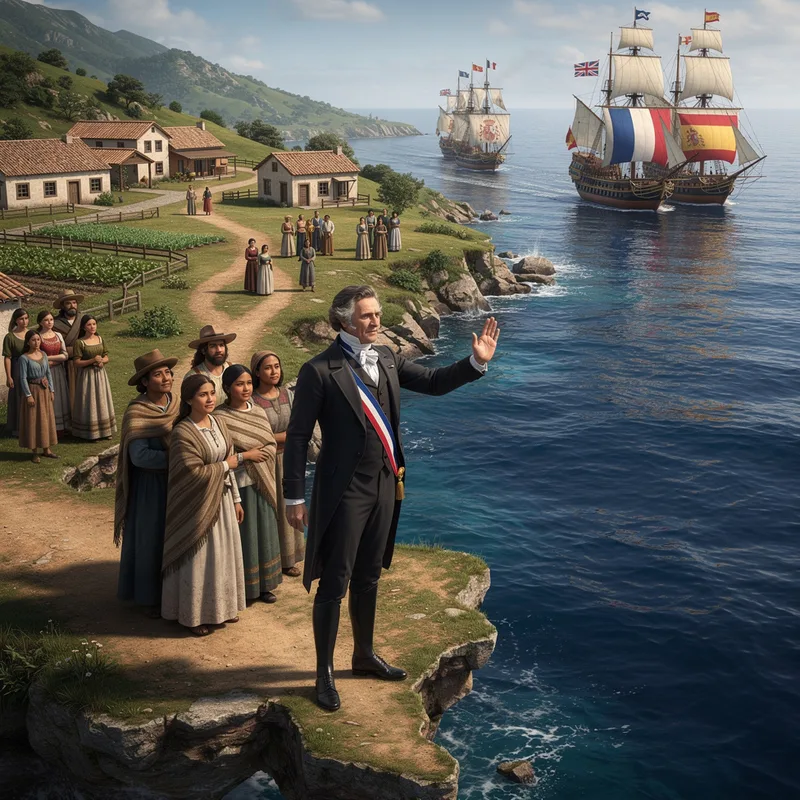
The Monroe Doctrine was introduced in 1823 to prevent European interference in the affairs of nations in the Americas.
Surface Forms
Morphology
Monroe + doctrine
While 'doctrine' signals a belief or policy, 'Monroe' is a proper name that does not convey the policy's content; knowing both words only lets a learner guess this is a policy associated with someone named Monroe. The specific meaning (a historical US policy opposing European colonialism in the Western Hemisphere) requires cultural/historical knowledge and is not derivable from the constituents, so it is not transparent to a B1 learner.
Etymology
The Monroe Doctrine comes from President James Monroe's 1823 message that warned European countries to 'stay out' of the Americas. The clear image of a U.S. leader telling Europe to keep away explains why the name now means a policy against European countries taking over or interfering in American nations.