
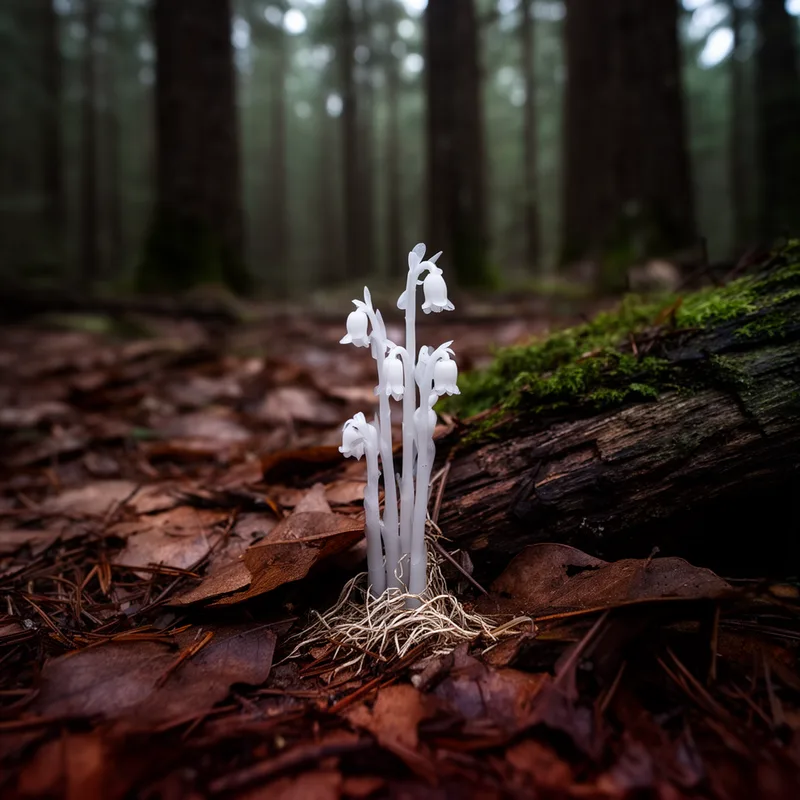
Monotropa uniflora
- noun
- /ˌmɒnəˈtroʊpə ˌjuːnɪˈflɔːrə/
- Specialized
- We found a patch of Monotropa uniflora growing in the shaded forest under the pine trees.
Examples
-
Unlike most plants, Monotropa uniflora does not produce chlorophyll and gets its nutrients from decaying matter.
-
The delicate, ghostly appearance of Monotropa uniflora makes it easy to spot in dark woodlands.
-
The Monotropa uniflora is often found in shaded areas.
-
Have you ever seen a Monotropa uniflora in the forest?
-
The unique, ghostly shape of Monotropa uniflora adds a mystical touch to the forest floor.
-
In early summer, Monotropa uniflora blooms with nodding flowers that eventually turn black as they age.
-
Many hikers are delighted to encounter Monotropa uniflora during their walks in shaded woodland trails.
Synonyms
A small waxy white or pink plant in shady woods that does not use sunlight to make food

A small woodland plant with pale nodding flowers that grows on decaying wood
Surface Forms
Morphology
Monotropa + uniflora
This is a scientific Latin binomial rather than a common English phrase; its meaning (a particular ghost-plant species) is not compositionally derived from everyday English words. The second element ‘uniflora’ is not attested in the provided lexical data and requires Latin/root knowledge (uni- + flora) that a typical B1 learner would not have, so the name is not predictable from its parts.
Etymology
Monotropa uniflora looks like a pale, waxy pipe or a little ghost, so people often call it 'ghost plant' or 'Indian pipe'. Its Latin name means 'one flower' because each stem usually has a single nodding bloom, and it is white because it does not make green leaves and takes food from dead leaves and wood, which explains its ghostly look.

