
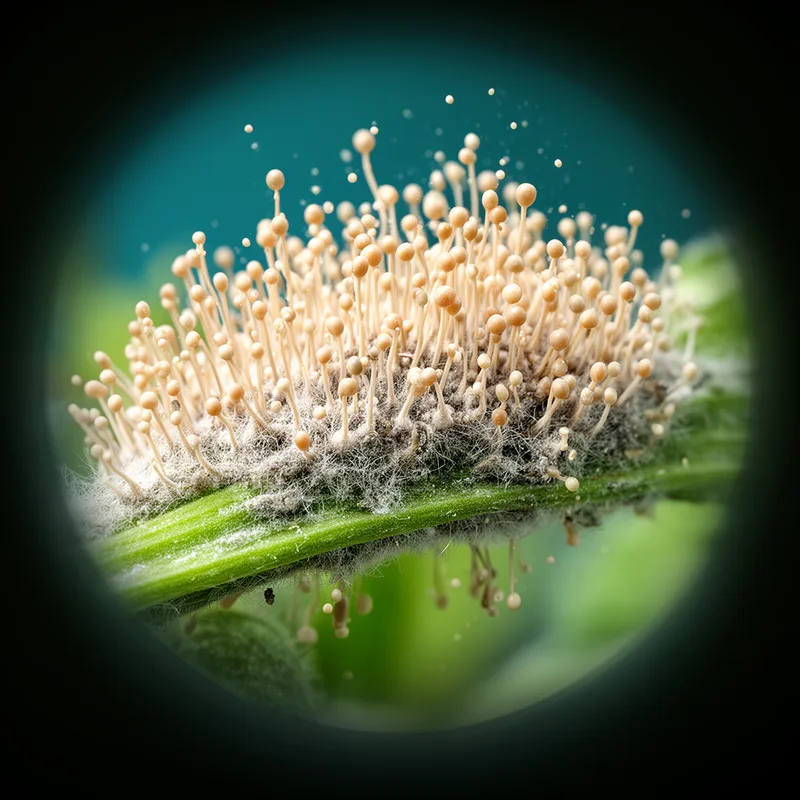
Moniliales
- noun
- /məˈnɪliˌeɪliz/
- Archaic
- Many plant diseases are caused by fungi in the Moniliales order.
Examples
-
Did you know that Moniliales lack conidiophores?
-
The classification of Moniliales has evolved with new genetic information.
-
Research on Moniliales has advanced our understanding of fungal reproduction.
-
The Moniliales order includes several species important for research.
-
Scientists have discovered new species within the Moniliales order that play a role in plant pathology.
-
The Moniliales are often studied for their unique reproductive strategies in the fungal kingdom.
-
Understanding the characteristics of Moniliales helps researchers develop better methods for controlling fungal diseases.
Synonyms

A group of fungi like molds that often cause plant diseases and are seen under a microscope
Compounds
- Archaic
A group of fungi like molds that often cause plant diseases and are seen under a microscope
Surface Forms
Morphology
Moniliales = Monilia (opaque) = Monilia + ales
The form follows standard taxonomic formation (genus name + '-ales' for an order), which is clear to those familiar with scientific nomenclature.
Etymology
Moniliales comes from the Latin root monil- meaning 'necklace' or 'string of beads', because these fungi often make chains of small, bead-like spores. That's why the name fits this order of fungi with a bead-like appearance.

