
Molucella laevis
- noun
- Specialized
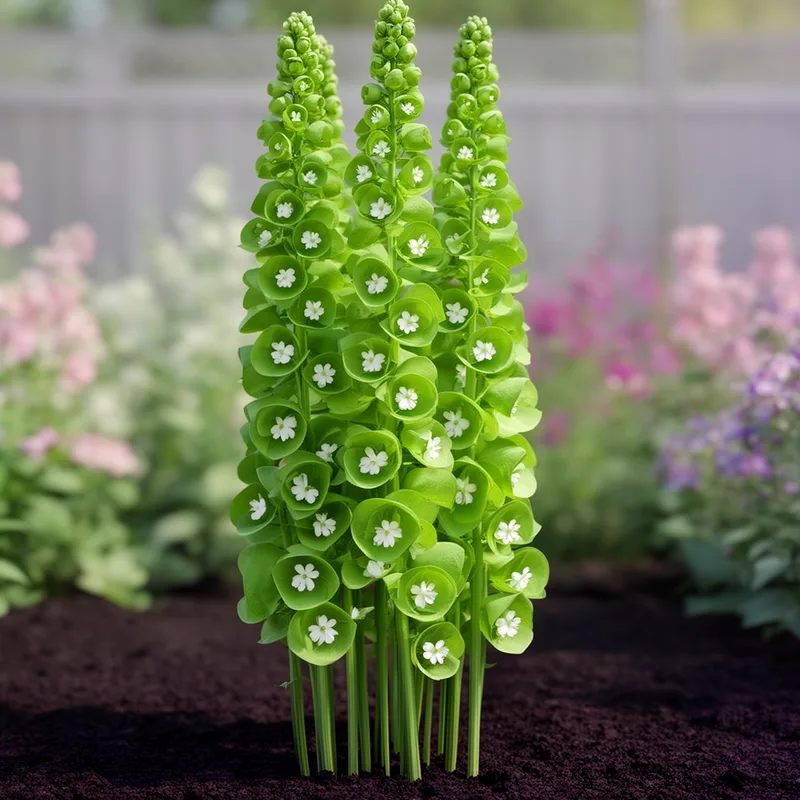
- Molucella laevis is often grown in gardens for its striking green bell-shaped calyces.
Examples
-
Florists use Molucella laevis in bouquets because of its long-lasting decorative appeal.
-
The unique appearance of Molucella laevis makes it a favorite in floral arrangements.
-
Look at the Molucella laevis!
-
The garden was filled with beautiful Molucella laevis plants.
-
Molucella laevis is often grown in gardens for its striking green bell-shaped calyces.
-
Florists use Molucella laevis in bouquets because of its long-lasting decorative appeal.
-
The unique appearance of Molucella laevis makes it a favorite in floral arrangements.
Synonyms

An annual scented plant with tall stems and green bell-shaped cups around small white flowers

A tall garden plant with green bell-shaped cups around small white flowers
Surface Forms
Morphology
Molucella + laevis
This is a botanical Latin binomial used as a proper name for a specific plant, not a compositional English phrase; a B1 learner who knows the surface strings would not be able to derive the referent or descriptive meaning. The constituents are technical/Latin forms (one not in common dictionaries), so the overall meaning (‘Bells of Ireland’, an aromatic annual) is unpredictable from the parts and thus opaque.
Etymology
Molucella laevis gets its common name 'Bells of Ireland' because its many bright green, bell-shaped cups around the tiny flowers look like a row of little bells on a stem. That's why florists use it in bouquets as a long-lasting, decorative green flower.

