
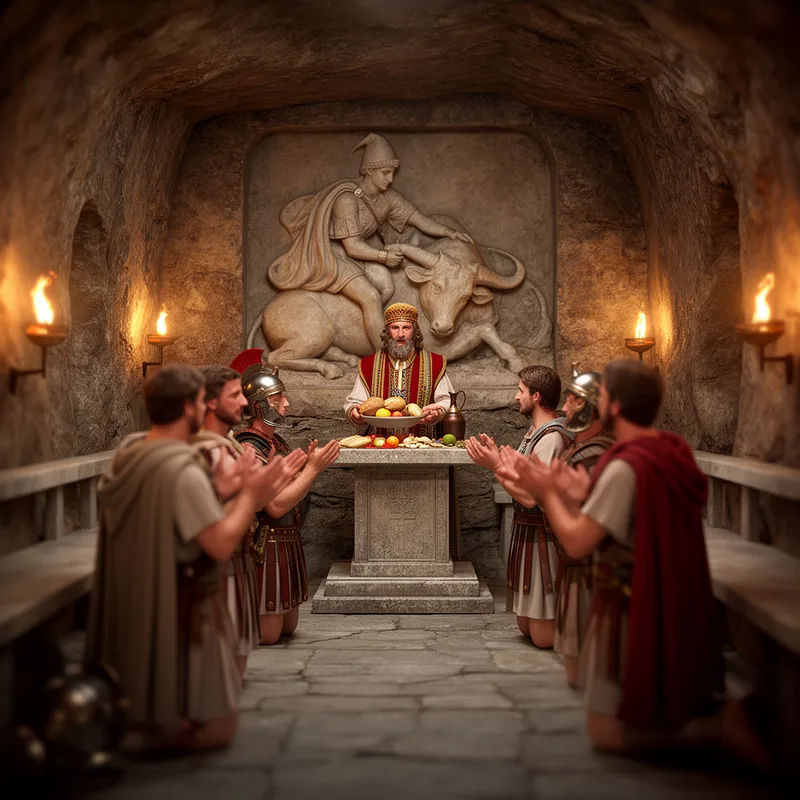
Mithraicism
- noun
- /ˌmɪθrəˈɪsɪzəm/
- Literature
- The mysterious rituals of Mithraicism were often conducted in underground temples called Mithraea.
Examples
-
Scholars have debated the influence of Mithraicism on early Christianity.
-
Interest in Mithraicism has grown among historians studying ancient Persian and Roman cultures.
-
The followers of Mithraicism held secretive rituals.
-
Many scholars study Mithraicism to understand ancient beliefs.
-
Interest in Mithraicism has grown among historians studying ancient Persian and Roman cultures.
-
Scholars have debated the influence of Mithraicism on early Christianity.
-
The mysterious rituals of Mithraicism were often conducted in underground temples called Mithraea.
Synonyms


 1
9.9
An ancient Persian religion that worships a god called Mithras
Surface Forms
Morphology
Mithraicism = Mithra (opaque) = Mithra + icism
The suffix 'icism' indicates a system of belief, but the specific religious context is not derivable from the base name 'Mithra' alone.
Etymology
Mithraicism comes from Mithra, the name of an ancient Persian 'god', plus the ending -ism, which means a 'belief' or 'system'. So Mithraicism is the 'belief system of Mithra'. This religion became popular in the Roman world, especially with soldiers, and its secret ceremonies were often held in underground temples.