
Mid-Atlantic Ridge
 1
7.1
1
7.1

- noun
- /ˌmɪdˈætlæntɪk rɪdʒ/
- HVDC from the mid-Atlantic Ridge to West Ireland is the same distance as Iceland to North Scotland.
Examples
-
Now take a look and you'll see the Mid-Atlantic Ridge is very prominent, right.
-
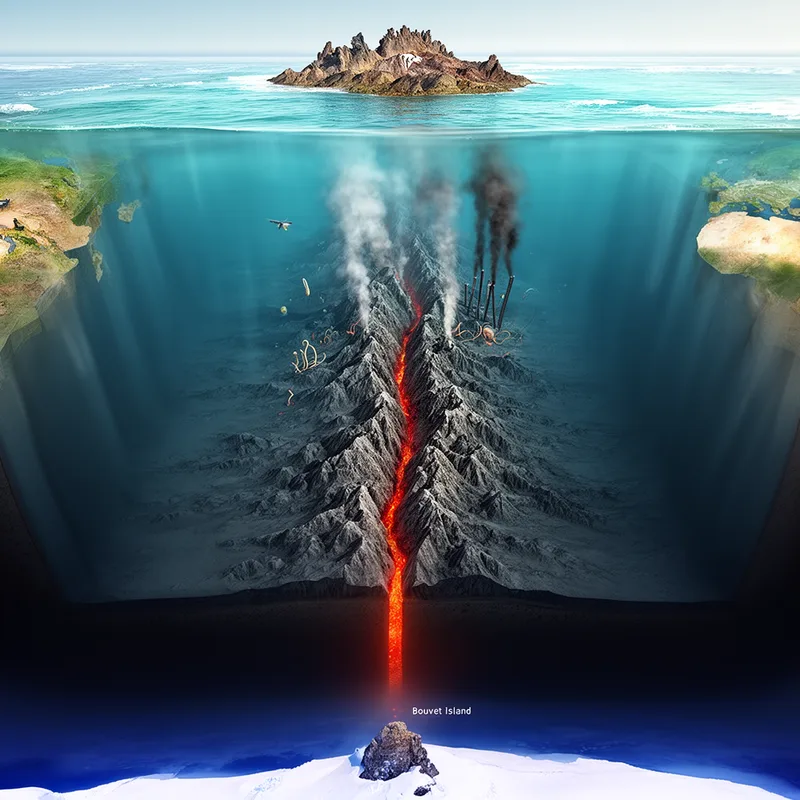
The Mid-Atlantic Ridge is a vast underwater mountain range that stretches from Iceland to Bouvet Island.
-
Why does the Mid-Atlantic Ridge spread apart in many places?
Blog text (10) -
But the driving force now is from the Mid-Atlantic Ridge rather than from within the Gulf.
Blog text (14) -
About 11 hours ago, the northern Mid-Atlantic Ridge had two earthquakes: 4.9 and 4.8.
Blog text (18) -
Also, signs to look for are larger earthquakes in the equatorial zone of the Mid-Atlantic Ridge, 6.6 or larger.
Blog text (18) -
Really watch at around 18 degrees and at around 58 degrees north on the Mid-Atlantic Ridge for movement; this is a beesline right towards the New Madrid.
Blog text (18) -
He's over the hydrothermal vents, Mid-Atlantic Ridge, 42 degrees west by 14 north.
-
Iceland's famous for its breathtaking scenery, its geysers, its Blue Lagoon—and for sitting astride the Mid-Atlantic Ridge.
Blog text (2) -
Scientists have discovered unique marine life along the hydrothermal vents of the Mid-Atlantic Ridge.
Surface Forms
Morphology
Mid-Atlantic + ridge
The term is compositionally transparent: 'Mid-Atlantic' denotes the middle region of the Atlantic Ocean and 'ridge' denotes a long elevated feature, so together they describe an elevated (here underwater) mountain range in the middle of the Atlantic. This locative + noun compound follows regular English composition patterns and would be derivable by a B1 learner who knows the constituent words.
Etymology
The noun Mid-Atlantic Ridge comes from a simple image: Mid-Atlantic means the middle of the Atlantic Ocean and ridge means a long raised line like a mountain under the sea. So the name describes 'a long underwater mountain range running down the middle of the Atlantic'.