
Mexican tulip poppy
- noun
- US
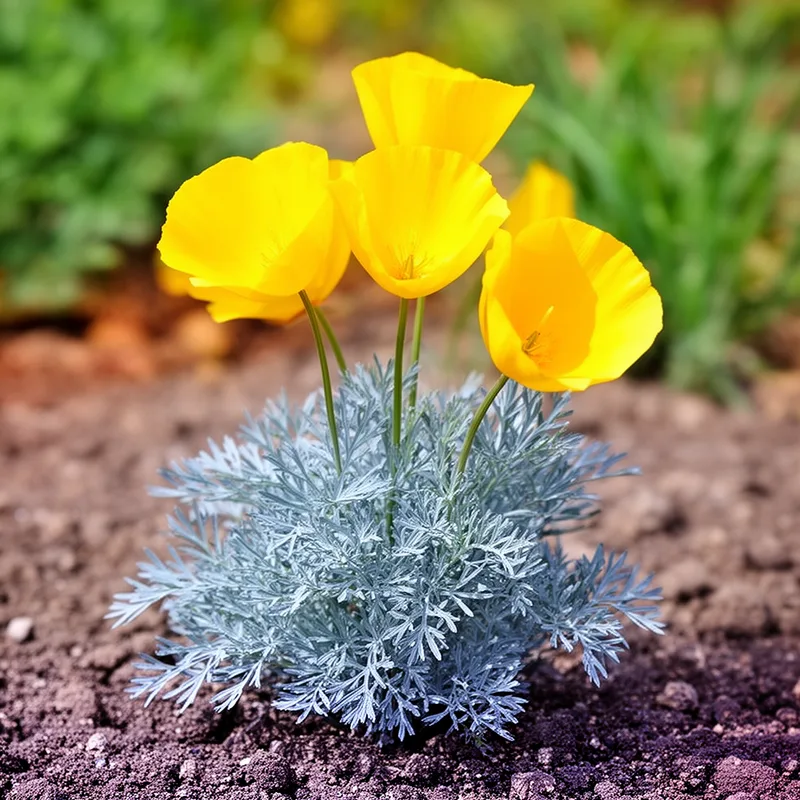
- Gardeners admire the blue-grey leaves of the Mexican tulip poppy, which contrast beautifully with its flowers.
Examples
-
The Mexican tulip poppy adds a splash of yellow to summer gardens with its vibrant blooms.
-
In Mexico, the Mexican tulip poppy thrives in sunny, well-drained soil.
-
The Mexican tulip poppy blooms beautifully in spring.
-
I planted a Mexican tulip poppy in my garden.
-
The Mexican tulip poppy adds a splash of yellow to summer gardens with its vibrant blooms.
-
In Mexico, the Mexican tulip poppy thrives in sunny, well-drained soil.
-
Gardeners admire the blue-grey leaves of the Mexican tulip poppy, which contrast beautifully with its flowers.
Synonyms

A plant that lives for many years with bright yellow flowers and feathery blue-grey leaves from Mexico

A plant from Mexico with bright yellow cup-shaped flowers and blue-grey divided leaves
Surface Forms
Morphology
The phrase is a literal descriptive compound: 'Mexican' marks origin, 'tulip' describes the flower's shape/appearance, and 'poppy' identifies the plant family, so the overall meaning (a poppy resembling a tulip from Mexico) is directly inferable from the parts. There is no idiomatic or metaphorical shift, and this compositional naming pattern is cross-linguistically common, so a B1 learner who knows the constituents will understand it.
Etymology
Mexican tulip poppy has a simple name: Mexican tells you it comes from Mexico, and its bright, cup-shaped flowers look like small tulip blooms on a plant related to poppies. That's why the name describes both where the plant is from and how it looks.

