
Merostomata
- noun
- /ˌmɛrəˈstoʊmətə/
- Specialized
- The Merostomata are known for their hard exoskeletons and jointed limbs.
Examples
-
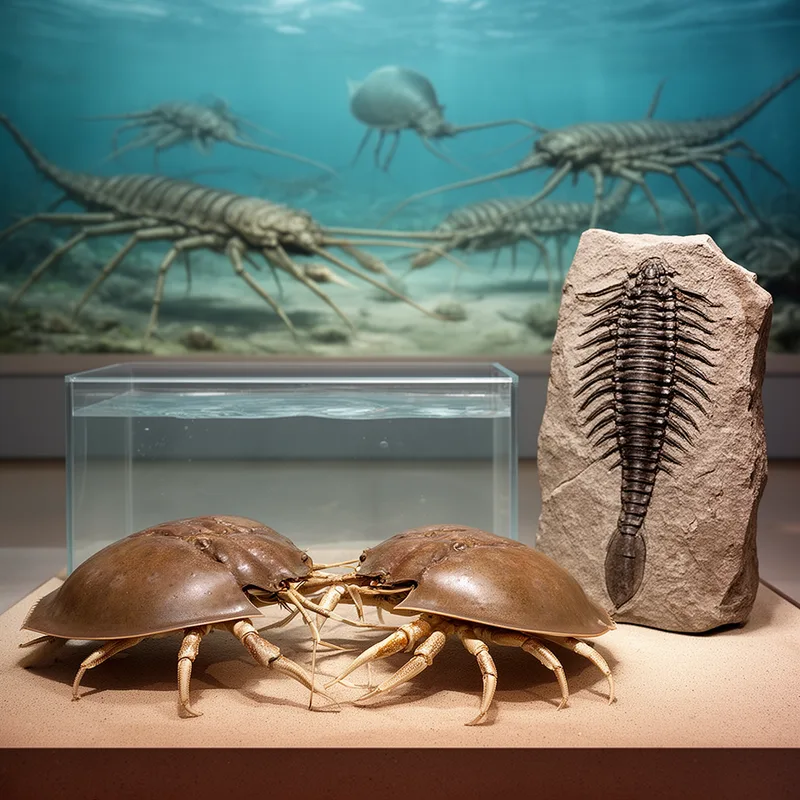
Horseshoe crabs belong to the order Xiphosura, within the Merostomata.
-
The Merostomata subclass includes fascinating creatures like horseshoe crabs.
-
Fossils of the extinct Eurypterida are important for studying the evolution of Merostomata.
-
Did you know that Merostomata are often called living fossils?
-
Horseshoe crabs belong to the subclass Merostomata, which is known for its unique anatomy.
-
Scientists study the Merostomata to learn more about ancient marine ecosystems.
-
The Merostomata group includes both modern horseshoe crabs and their prehistoric relatives.
Surface Forms
Morphology
Merostomata = Merostoma (opaque) = mero + stoma + ta
A learned scientific name formed from Greek combining forms and a Greek plural ending; the components are technical and not transparent to average learners.
Etymology
Merostomata comes from Greek parts mero- meaning 'part' and -stoma meaning 'mouth'. A helpful way to remember it is to think of these sea animals as having mouths and body parts that work together, which is why the name is used for the group that includes horseshoe crabs and sea scorpions.

