
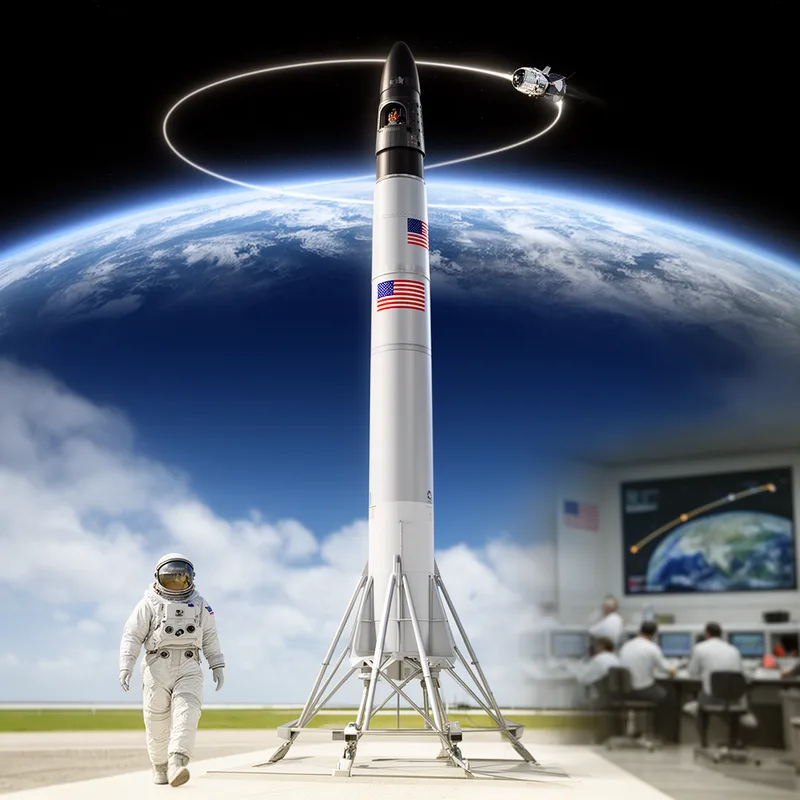
Mercury program
- proper noun
- /ˈmɜːrkjʊri ˈprɒɡræm/
- The Mercury program successfully launched the first American astronaut into space in 1961.
Examples
-
Did you know that the Mercury program was the first human spaceflight initiative?
-
The Mercury program marked the United States' first steps into human spaceflight.
-
Each mission in the Mercury program carried only a single astronaut.
-
Historians often credit the Mercury program with paving the way for later achievements like Apollo.
-
The Mercury program launched its first mission in 1961.
-
Many historic milestones were achieved during the Mercury program, including the first orbital flight.
-
The Mercury program laid the groundwork for future space missions by demonstrating human spaceflight capabilities.
Synonyms


 1
5.9
1
5.9
The first American program to send a person into orbit around Earth
Surface Forms
Morphology
Mercury + program
While a learner who knows 'Mercury' and 'program' can guess this is a program named "Mercury," the specific meaning — the United States' first human spaceflight program (1961–1963) — is a historical, proper-name reference that cannot be derived from the constituent meanings alone. Identifying this precise referent requires world/cultural knowledge rather than compositional inference.
Etymology
Mercury program was named after the Roman god Mercury, a quick 'messenger' who moved between earth and sky. Because he suggested 'speed' and travel to the heavens, the name fit America's first missions to send a single person into orbit.