

Mater Turrita
- proper noun
- Literature
- Ancient artworks often portray Mater Turrita with a crown of towers upon her head.
Examples
-
The temple was dedicated to Mater Turrita, revered as the protectress of the city.
-
Roman religion incorporated Mater Turrita alongside other mother goddesses.
-
The ancient temple was dedicated to Mater Turrita.
-
Many artifacts were found that represent Mater Turrita.
-
Ancient artworks often portray Mater Turrita with a crown of towers upon her head.
-
Roman religion incorporated Mater Turrita alongside other mother goddesses.
-
The temple was dedicated to Mater Turrita, revered as the protectress of the city.
Synonyms

 41
9.9
41
9.9

Roman goddess of fertility and good harvests
 15
9.8
15
9.8
A mother goddess in ancient Greek stories, wife of Cronus and mother of Zeus
 2
9.9
2
9.9
An ancient mother goddess from what is now Turkey linked to nature, fertility, and mountains
 2
9.9
2
9.9
An ancient Phrygian goddess worshipped for nature and fertility, often shown with lions
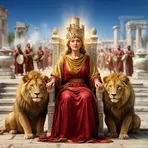
A mother goddess from ancient Phrygia later linked to the Greek Rhea and Roman Ops
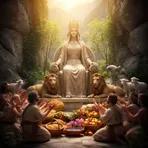
A mother goddess from ancient Phrygia who people worship for life and fertility
Surface Forms
Morphology
mater + Turrita
Although 'mater' clearly means 'mother', 'Turrita' is not a standard English word and is listed as '[Word not found in dictionary]'; the proper-name is derived from Latin morphology (turrita = 'turreted') that a B1 learner would not reliably know. Because one constituent is opaque/non‑transparent to typical learners and the overall term is a culture‑specific proper name, the full meaning ('ancient mother goddess with a turreted crown') cannot be derived from the parts by an average B1 learner.
Etymology
Mater Turrita is pictured as a mother wearing a crown of small towers. Her name mixes Mater and Turrita, which can be read as 'with towers', so the image helps explain why she was seen as a protector of the city.