
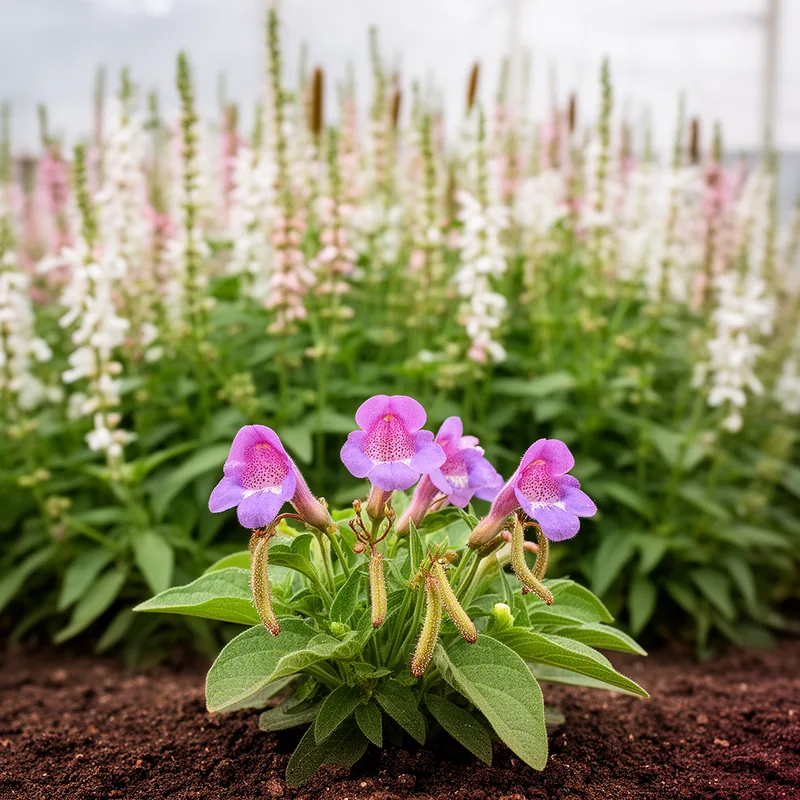
Martyniaceae
- noun
- Specialized
- The unicorn plant belongs to the Martyniaceae family, known for its sticky, glandular fruits.
Examples
-
Many botanists now include Martyniaceae within the Pedaliaceae due to similarities in floral structure.
-
Recent studies have reclassified several species formerly assigned to Martyniaceae.
-
The Martyniaceae family includes several unique flowering plants.
-
Did you know that Martyniaceae can be found in tropical regions?
-
Many botanists now include Martyniaceae within the Pedaliaceae due to similarities in floral structure.
-
The unicorn plant belongs to the Martyniaceae family, known for its sticky, glandular fruits.
-
The Martyniaceae family includes several unique flowering plants.
Surface Forms
Morphology
Martyniaceae = Martynia (opaque) = martyni + aceae
The family name is formed by attaching the specialized botanical suffix '-aceae' to the genus stem 'Martyni-'; this is technical nomenclature unlikely to be transparent to average learners.
Etymology
Martyniaceae comes from the plant name Martynia, which was named for the English botanist John Martyn, plus the family ending -aceae that means 'family' in plant names. So Martyniaceae is the 'Martynia family', a group of related flowering plants, just like Rosaceae is the 'rose family'.

