
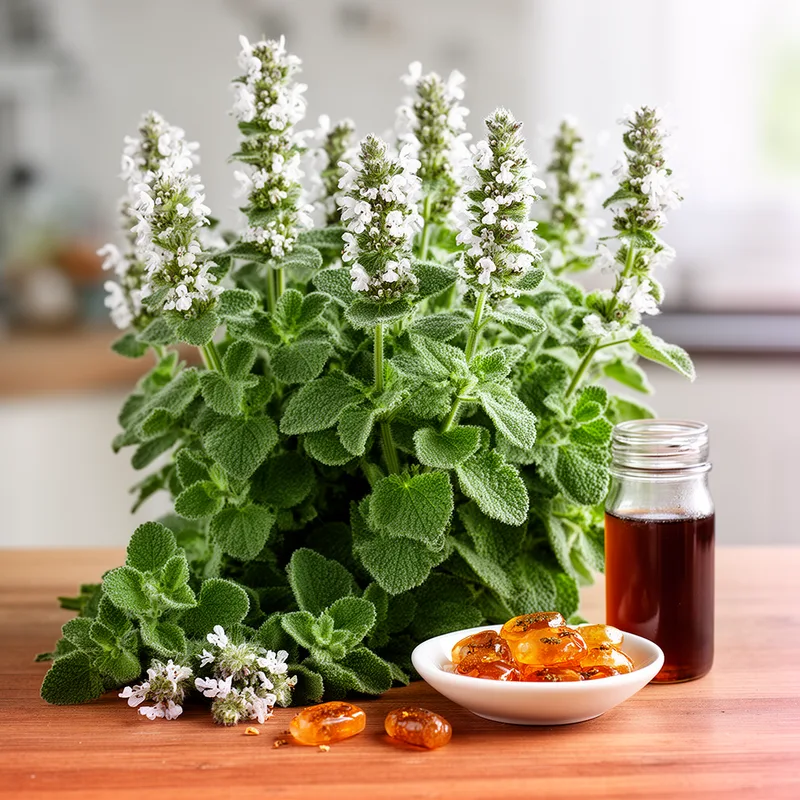
Marrubium vulgare
- noun
- Specialized
- The leaves of Marrubium vulgare contain a bitter extract that is used for flavoring in some traditional dishes.
Examples
-
Marrubium vulgare is commonly used in herbal remedies for coughs and digestive issues.
-
The Marrubium vulgare plant is often found in Mediterranean regions.
-
Researchers studied the medicinal properties of Marrubium vulgare extracts in their clinical trials.
-
The bitter taste of Marrubium vulgare makes it a distinctive ingredient in traditional candies.
-
Many herbalists use Marrubium vulgare for its medicinal properties.
-
Marrubium vulgare is often used in herbal medicine to help treat respiratory ailments.
-
You can find Marrubium vulgare in many natural herbal remedies for its beneficial health effects.
Synonyms

An herb from Europe with hairy leaves and small white flowers used in medicine and to flavor food
A European herb with hairy leaves and small white flowers that people use to make bitter medicine and flavoring
Surface Forms
Morphology
Marrubium + vulgare
This is a Latin binomial (genus + specific epithet). Knowing 'Marrubium' (a genus of herbs) and the likely meaning of 'vulgare' ('common') lets a learner infer it is the common species of that genus, but the specific details in the definition (aromatic, bitter extract, medicinal/flavoring use) are not derivable from the name alone, so comprehension is only partial.
Etymology
Marrubium vulgare may come from Latin words: marrubium, a name for a bitter herb, and vulgare, which means 'common'. That matches the plant today because it is a common bitter herb used in old medicines and as a flavor, so the name helps you remember its taste and use.

