

Marduk
 3
9.9

- proper noun
- /ˈmɑrdʊk/
- Literature
- That Iron Age myth tells the story of the hero god Marduk, who kills the primordial serpent goddess Tiamat and creates heaven and earth out of her dismembered body.
- temple of Marduk
- Marduk of Babylon
Loading YouTube…
Watch on YouTubeAnd he wrote about how he was deathly afraid of their deity, Bel Marduk.
- And he wrote about how he was deathly afraid of their deity, Bel Marduk.
- Why is the temple of Marduk, the city God of of Babylon, on top of the Tower of Babel?
Examples
-
Bel had all the attributes of Marduk, and his position and ritual were almost the same, but gradually Bel was recognized as the god of order and destiny.
-
The Babylonians believed that the god Marduk created order out of chaos, separating the land from the water, heaven from earth.
Blog text (33) -
Remember the cosmic battle between Marduk and Tiamat?
-
Why is the temple of Marduk, the city God of of Babylon, on top of the Tower of Babel?
-
Bel is the newer name of Marduk, the main Babylonian god.
-
The priest of Bel-Marduk, supreme God of Babylon, jealously watches the image of the rival goddess, Ishtar, enter the city, borne in a sacred ark.
-
The temple is dedicated to the Babylonian god Marduk.
-
Each year, as winter arrived, it was believed that Marduk would do battle with the monsters of chaos.
-
The most elaborate temple in the city center was dedicated to Marduk, the patron god of Babylon, whose name was too holy to speak.
Synonyms


 1
9.9
The main god worshipped in ancient Babylon, also called Marduk
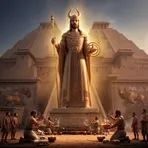
The main god in ancient Babylon who people worship as the city's protector
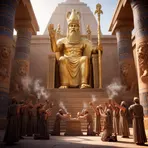
The chief god worshipped in ancient Babylon
Surface Forms
Etymology
Marduk comes from an old Babylonian god-name; one common idea links it to Sumerian AMAR and UTU, where amar means 'calf' and Utu is the 'sun god', so the name can mean 'calf of the sun'. That's why Marduk was seen as the powerful chief god of Babylon, a creator and protector in their stories.