
Mannerism


 1
9.6
1
9.6
- noun
- /ˈmænərɪzəm/
- Specialized
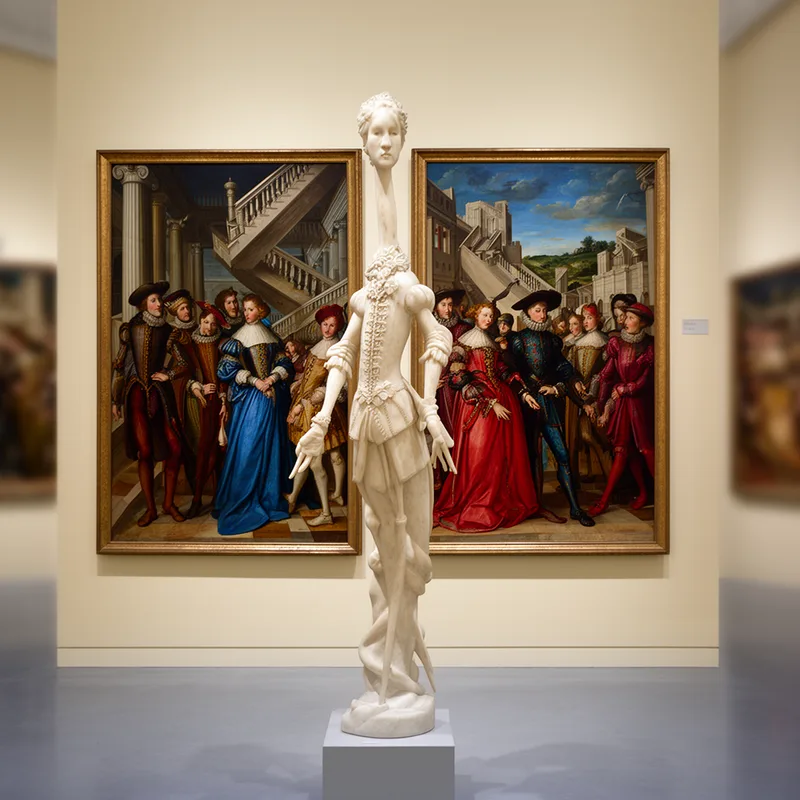
- The elongated figures and distorted perspectives are hallmarks of mannerism in art.
- stylistic mannerisms
- Italian Mannerism
Examples
-
Interestingly, Goya, Rococo, and Romanticism artists are placed between the Mannerism and the Baroque schools.
Blog text (2) -
In its "mannerism," it admits its debt to other images and does not purport to be a representation of reality.
Academic text (2014) -
Modern art history regularly locates it at the origins of Florentine Mannerism.
Academic text (2011) -
In its writhing poses, the Massacre, in particular, stands out as a testament to Bonifacio's avant-garde enthusiasm for Mannerism.
Academic text (2000) -
As a result, his art captured "the freshness and naturalness of our origins," rather than the "affectation and preciousness" of Italian Mannerism.
Academic text (1992) -
For Ruskin, the right visual representation of the body was found in early Renaissance painting, after the advent of corporeal naturalism but before the fantastic contortions of later Renaissance mannerism.
Academic text (2017) -
Further to the right, close to the High Renaissance, the algorithm placed three painters associated with the Mannerism movement: Veronese, Tintoretto, and El Greco, who were inspired by Renaissance artists such as Michelangelo (O'Mahony, 2006).
Blog text (2) -
Many artists embraced mannerism as a reaction against the naturalism of the Renaissance.
-
In exploring mannerism, we can see how artists played with form and space to create unique effects.
How Stylized
- Specialized
6
8.7
 1
8.5
1
8.5
- Specialized
1
9.6
1
8.1
12
6.1
Surface Forms
Morphology
Etymology
Mannerism comes from the Italian maniera, which means 'manner' or 'style' and is like the English word manner. It was used for art in the late 1500s that shows a strong, often exaggerated 'manner' with strange poses and long figures, so the name points to its unusual style.