

Manduca sexta
- noun
- /mænˈduːkə ˈsɛkstə/
- Specialized
- The larvae of Manduca sexta are known for their voracious appetite for tobacco leaves.
Examples
-
Farmers often notice Manduca sexta larvae in their fields.
-
During spring, Manduca sexta larvae can be seen munching on the bright green tobacco leaves in fields.
-
Gardeners often mistake Manduca sexta for the similar-looking tomato hornworm.
-
Researchers use Manduca sexta as a model organism in studies of insect physiology.
-
The Manduca sexta is often found on tobacco plants.
-
The larvae of Manduca sexta primarily feed on tobacco plants, causing significant damage to the crops.
-
Many gardeners are concerned when they find Manduca sexta in their gardens due to its appetite for tobacco leaves.
Synonyms
 1
7.9
1
7.9

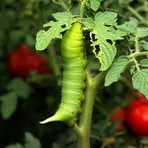
A large green caterpillar with a horn at its tail that eats tomato plants

A large green caterpillar with white stripes that eats tobacco and similar plants

A large green caterpillar with white stripes that eats tomato and tobacco plants
Surface Forms
Morphology
Manduca + sexta
This is a Latin binomial: knowing 'Manduca' as a genus of moths lets a learner infer the phrase names a species in that genus, so there is some compositional clue. However, 'sexta' is a Latin element not part of everyday English and the precise meaning 'large green larva / tobacco hornworm' is specialist knowledge that cannot be derived from the parts alone, making the expression only partially transparent to a B1 learner.
Etymology
Manduca sexta may come from Latin: Manduca from 'to chew' and sexta meaning 'sixth'. That image of a big 'chewing' larva makes it easy to remember that Manduca sexta is the green tobacco hornworm that eats tobacco and tomato leaves.