

Malus baccata
- noun
- Specialized
- Farmers often grow Malus baccata for its hardy fruit, which is popular in jelly making.
Examples
-
Horticulturists recommend planting Malus baccata because it tolerates colder climates than many other apple varieties.
-
The ornamental Malus baccata is prized for its profusion of white spring blossoms.
-
The Malus baccata tree produces small, tart apples.
-
Many gardeners love Malus baccata for its beautiful blossoms.
-
Farmers often grow Malus baccata for its small, acidic fruit, which is excellent for making preserves.
-
The Malus baccata tree is cultivated primarily for its tart red apples, popular in jams and jellies.
-
Gardeners appreciate Malus baccata not only for its hardy fruit but also for its ability to withstand cold temperatures.
Synonyms

A small red apple that tastes tart and is used to make jam
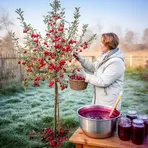
A small tree that makes tart red apples used to make jam
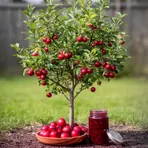
A small hardy tree that makes sour red apples used for jam

A small tree that makes red sour fruit used for jam
Surface Forms
Morphology
Malus + baccata
The form is a Latin binomial: 'Malus' names the apple genus, so a learner who knows that constituent can infer this refers to a type of apple/tree. However 'baccata' is not a common English word and the specific sense (an Asian wild crab apple cultivated for tart fruit) is specialized and not fully derivable from the parts, so the overall meaning is only partially predictable.
Etymology
Malus baccata is a scientific name from Latin: Malus means 'apple' and baccata means 'berry-like' or 'having small berries'. So the name paints the image of an apple tree with many small, red, sour fruits, which matches the wild crab apple used for jellies and preserves.

