
Mahdist


 1
9.9
- noun
- /ˈmɑːdɪst/
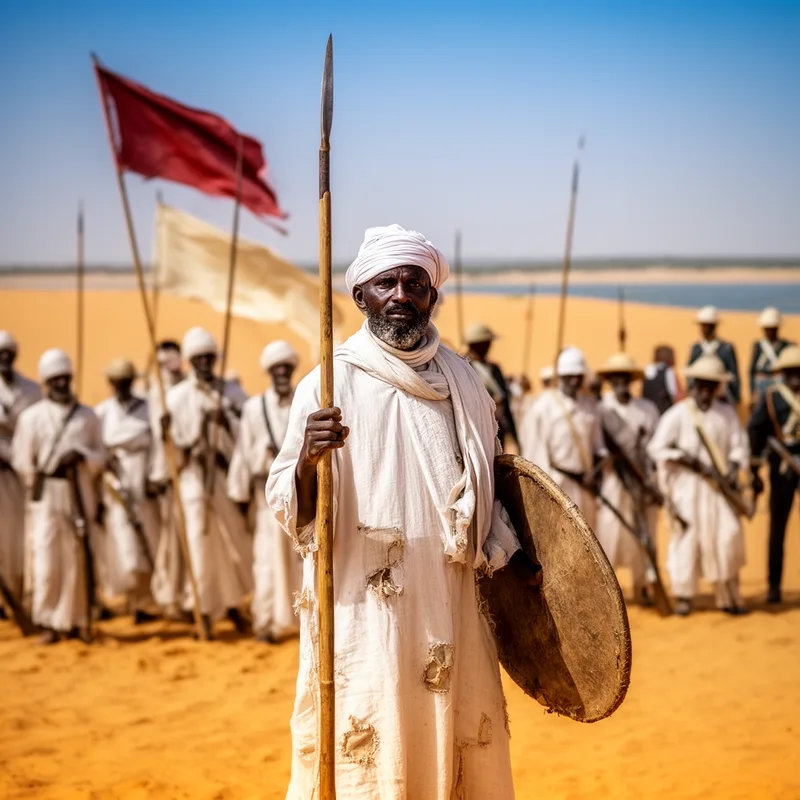
- During the late 19th century, many local tribes joined the Mahdist movement to challenge British rule in Sudan.
- Mahdist State
Examples
-
Following the defeat of the Mahdist forces, the British established control over Sudan to maintain stability in the region.
-
The former was once thought to have been the dress of the rank and file, the latter of an officer in the Mahdist armies.
Academic text (2001) -
In this last section, we have displayed a tunic, muraqqa'a, from the early period of the Mahdist state in late-nineteenth-century Sudan.
Academic text (2001) -
We see headlines of massacres and slaughters; beneath them are artists' impressions of the Mahdist atrocities.
Fiction book (2002) -
In other words, while certain internal factors shared by both the Khatmiyya and the Mahdists facilitated their economic advancement, the pattern by which this development occurred would not have been possible without British patronage of these sects.
Academic text (1990) -
Ubayd Allah is one of several figures in Islamic African history who have claimed to be the Mahdi, the most celebrated being Muhammad Ahmad, who founded the Mahdist state in northern Sudan in the late nineteenth century.
Academic text (2004) -
These two garments, however, actually tell a much subtler story that relates to the politics of costume and the evolution of the Mahdist state from a movement of religious zeal under the Mahdi to an increasingly militaristic autocracy under his successor, the Khalifa.
Academic text (2001) -
The Mahdists believed they were part of a religious revolution led by their self-proclaimed leader, the Mahdi.
Surface Forms
Morphology
Mahdist = Mahdi (semi-transparent) = Mahdi + ist
The suffix '-ist' indicates a follower or supporter, but understanding 'Mahdist' requires knowledge of the historical and religious context of 'Mahdi'.
Etymology
Mahdist comes from Mahdi, an Arabic word meaning 'the guided one', like the English word 'guide'. A Mahdist is a follower of a Mahdi, so the word came to mean someone who supports a leader who said he was the Mahdi, as happened in Sudan in the late 1800s.