
Magnolia acuminata
- noun
- /mæɡˈnoʊliə əˌkjuːməˈneɪtə/
- Specialized
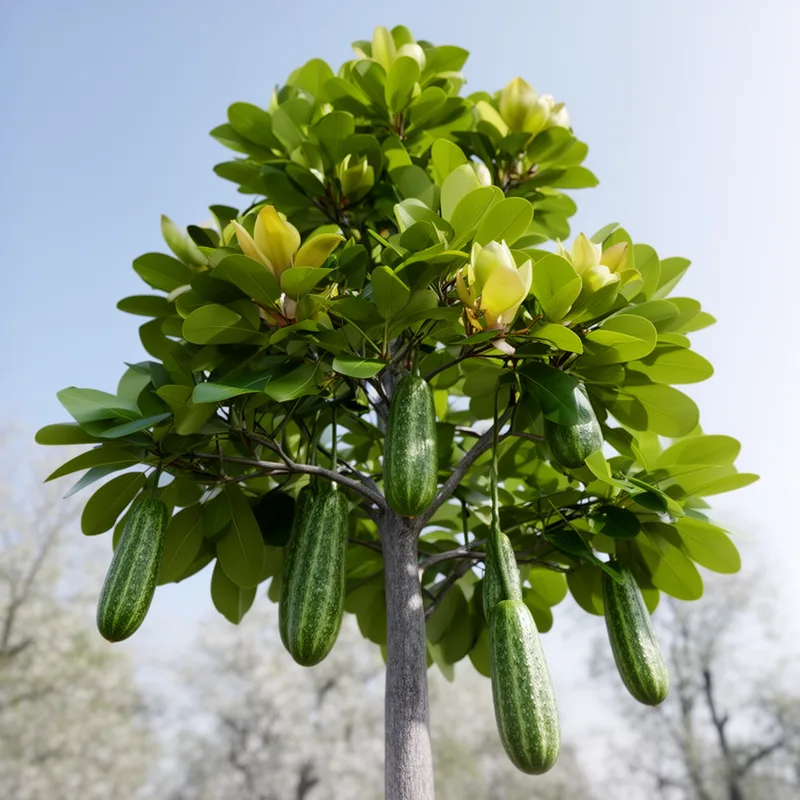
- The Magnolia acuminata is often called the cucumber tree due to the shape of its fruit.
Examples
-
In spring, the Magnolia acuminata produces yellow-green flowers among its large, broad leaves.
-
The Magnolia acuminata is often found in the eastern United States.
-
A mature Magnolia acuminata can reach heights of up to 30 meters in the wild.
-
Did you see the beautiful Magnolia acuminata in the park?
-
In spring, the Magnolia acuminata produces yellow-green flowers among its large, broad leaves.
-
A mature Magnolia acuminata can reach heights of up to 30 meters in the wild.
-
The Magnolia acuminata is often called the cucumber tree due to the shape of its fruit.
Synonyms
A large American tree with big leaves and fruit shaped like a small cucumber
Surface Forms
Morphology
magnolia + acuminata
This is a scientific binomial: 'magnolia' is transparent and signals the plant genus, but 'acuminata' is a Latin adjective not part of everyday English (and the input shows it as not found in the dictionary). Even if a learner guessed it meant a property like 'pointed', they would only get that it is a particular type of magnolia, not the specific characteristics or common name (cucumber tree). Therefore the phrase partially signals meaning but is not fully derivable by a B1 learner.
Etymology
Magnolia acuminata comes from how the tree looks. People call it the cucumber tree because its fruit look like green cucumbers, and the part acuminata means 'pointed' for the sharp tips of its leaves, so the name helps you remember the tree's fruit and leaf shape.

