
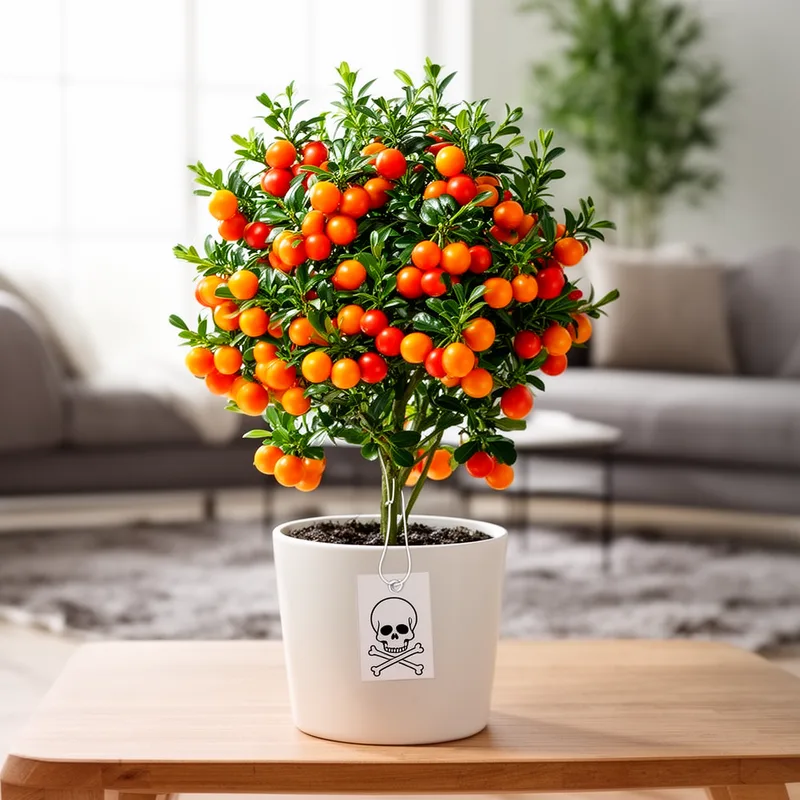
Madeira winter cherry
- noun
- Gardeners admire the Madeira winter cherry for its bright, cherry-sized berries.
Examples
-
The Madeira winter cherry is often displayed in homes despite its toxic fruit.
-
Because the Madeira winter cherry is poisonous, keep it away from children and pets.
-
The Madeira winter cherry produces beautiful red fruits.
-
Many people enjoy the Madeira winter cherry as a houseplant.
-
The Madeira winter cherry is popular among houseplant enthusiasts for its vibrant red fruits, but it is important to note that they are toxic.
-
Due to the poisonous nature of the Madeira winter cherry, it is advisable to place it out of reach of children and pets.
-
Many homes feature the Madeira winter cherry because its ornamental berries add a splash of color to indoor spaces, despite being hazardous.
Synonyms

A small shrub with bright red or yellow cherry-like berries that are poisonous

A small potted plant with bright red or yellow berries that are poisonous
Surface Forms
Morphology
A B1 learner who knows 'Madeira', 'winter' and 'cherry' can reasonably infer this is a cherry-like plant associated with Madeira or winter (i.e. a plant bearing cherry-sized fruit), so some basic sense of a plant with small fruit is derivable. However, details such as its actual South American origin, use as a houseplant, and that the fruit is poisonous are not predictable from the constituents, making the expression only partly transparent.
Etymology
Madeira winter cherry gets its name from its bright, cherry-like berries that often appear in winter and from the island of Madeira, where the plant became well known. Because the berries look like small cherries but are 'poisonous', the name helps you remember it is a pretty houseplant with dangerous fruit.

