
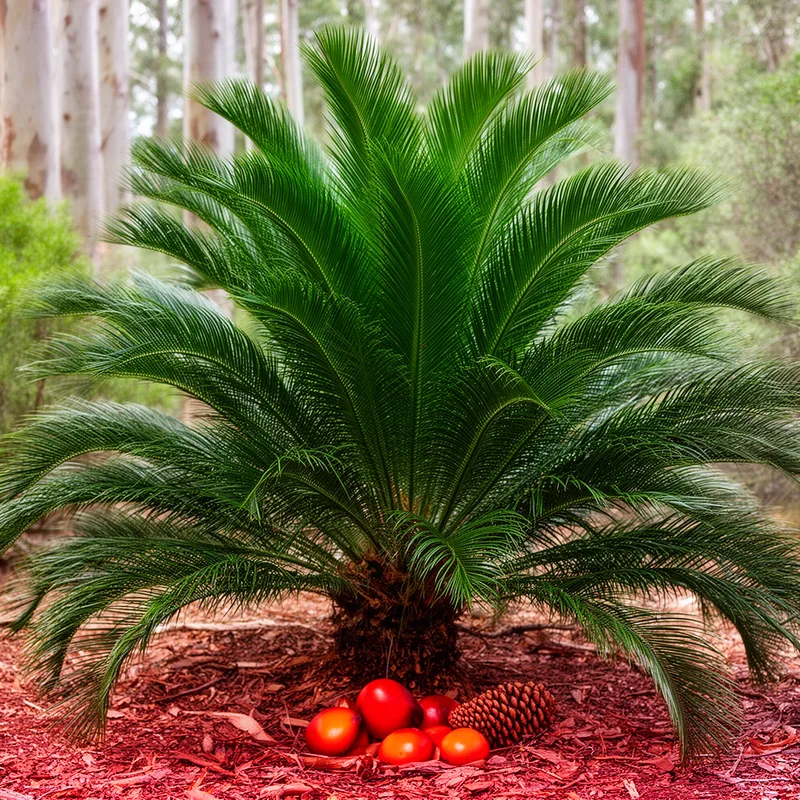
Macrozamia communis
- noun
- Specialized
- Gardeners appreciate Macrozamia communis for its attractive glossy leaves and unique shape.
Examples
-
Gardeners value Macrozamia communis for its resilience and striking foliage.
-
The Macrozamia communis thrives in the Australian climate.
-
The Macrozamia communis is a common sight in the forests of eastern Australia.
-
The seeds of Macrozamia communis are toxic if ingested without proper preparation.
-
Many gardeners love Macrozamia communis for its unique appearance.
-
In landscaping, Macrozamia communis is often chosen for its striking visual appeal and low maintenance requirements.
-
The Macrozamia communis can be found in numerous gardens across New South Wales, showcasing its popularity among plant enthusiasts.
Synonyms
A large evergreen plant from Australia with palm-like glossy leaves and edible seeds
Surface Forms
Morphology
Macrozamia + communis
This is a Latin taxonomic name: 'Macrozamia' identifies the genus (a type of cycad) and 'communis' is a Latin epithet meaning 'common' in many languages, though it is not a standard English dictionary headword here. A B1 learner who knew both constituents could infer it names a (common) species of Macrozamia, but species names are technical and the full descriptive meaning (large palmlike evergreen cycad with specific traits) is specialized, so the compositional link is partial rather than fully transparent.
Etymology
Macrozamia communis comes from old Greek and Latin parts: macro- means 'large', zamia is the name for a kind of ancient plant called a cycad, and communis means 'common'. So the name literally says 'large, common zamia', which fits because this big, palm-like plant is a common sight in eastern Australia.

