
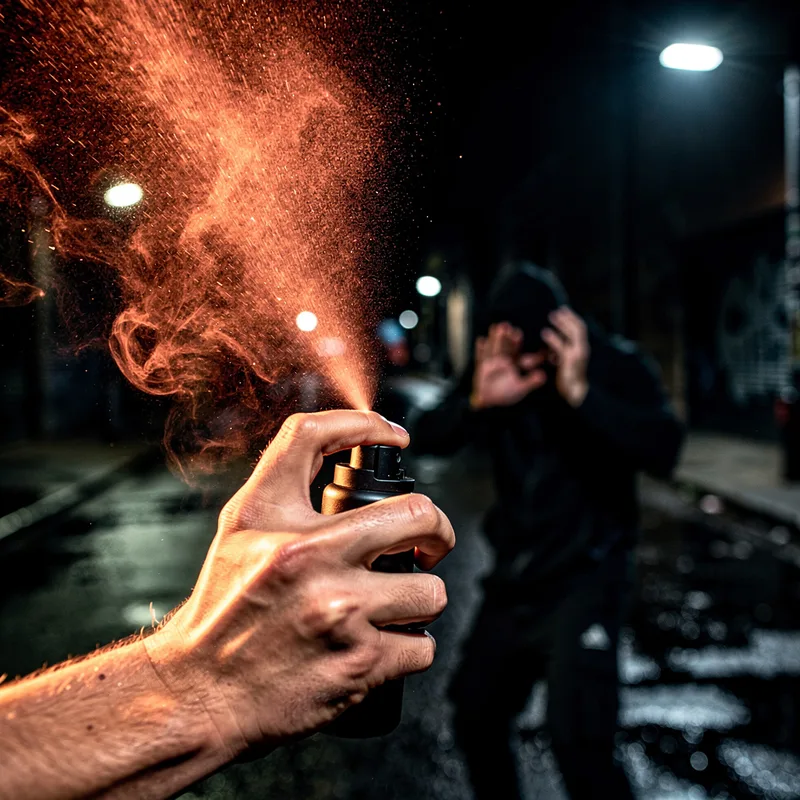
Mace
 29
7.6
29
7.6

- noun
- /meɪs/
 :
spray de pimienta
:
spray de pimienta
- The security guard used a can of mace to fend off the attacker in the parking lot.
- spray Mace
- can of Mace
- eyes with Mace
Examples
-
I took a quick glance at my surroundings while fumbling for the mace attached to my keychain.
Fiction book (2002) -
To protect herself during her evening jog, she always carries a can of mace in her pocket.
-
"I would like my mace and pack, at least."
Fiction book (1992) -
Did you not once consider using your Mace?
-
"Another minute and I'd have had my can of Mace out."
Fiction book (2002) -
She runs about anywhere from one to three miles and carries Mace with her.
-
Mace will only temporarily stop your attacker.
-
As Karen raises the canister of mace, the trio turns and heads down to the right.
Fiction book (1998) -
When the aggressive dog approached, he had to spray it with mace to escape without injury.
Synonyms
 31
3.5
31
3.5
A small can of strong liquid that makes your eyes burn to stop people or animals
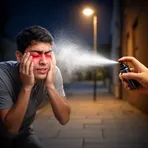
A liquid spray that makes eyes burn and makes people feel dizzy so they cannot move
Compounds
A liquid spray that makes eyes burn and makes people feel dizzy so they cannot move

- UK
A tall marsh plant with long flat leaves and long brown seed heads used for weaving mats and chair seats
Surface Forms
Etymology
Mace for a self-defense spray started as a brand name. The company took the name from the old weapon mace, a heavy club used for 'protection', so the brand name became the common word for a spray that helps you 'defend' yourself.