
Maccabean


 1
9.9
- noun
- /ˌmækəˈbiːən/
- The rules will not teach how the Maccabean sage Eleazar is different from Ivan Boesky, or how to identify evil and resist its allure.
Examples
-
He and some of his Christian brothers and sisters, in direct opposition to both Maccabean works, are said to suffer torture and death because they are passionately in love with God, not because they fear his punishment or to demonstrate their Stoic fortitude or apathy.
Academic text (2006) -
"There's a strand of Jewish thought -- mentioned by Mark Braverman, among others -- that Jesus was essentially a Maccabean who died resisting Rome's encroachments on the Jewish people."
Blog text (12) -
The single use of the phrase in The Maccabean, the journal of the Federation of American Zionists, occurred in 1901.
Academic text (2008) -
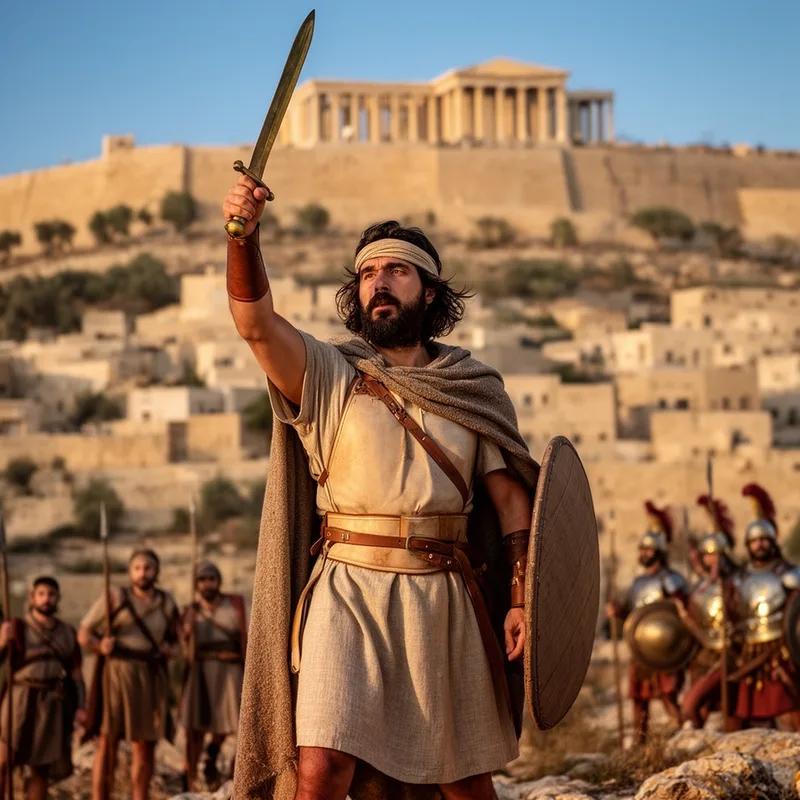
During the feast of Hanukkah, many celebrate stories of the Maccabean revolt against oppression.
-
The Maccabean warriors are remembered for their courageous stand against the Greek rulers.
-
As a Maccabean, she felt a strong connection to her ancestors who fought for their religious freedom.
Surface Forms
Etymology
Maccabean was a member of the Maccabees, a group of Jewish fighters, and the name comes from Maccabee, which probably meant 'hammer' in old Hebrew. Imagine a hammer to remember a fighter who helped win freedom and is still honored at Hanukkah.