
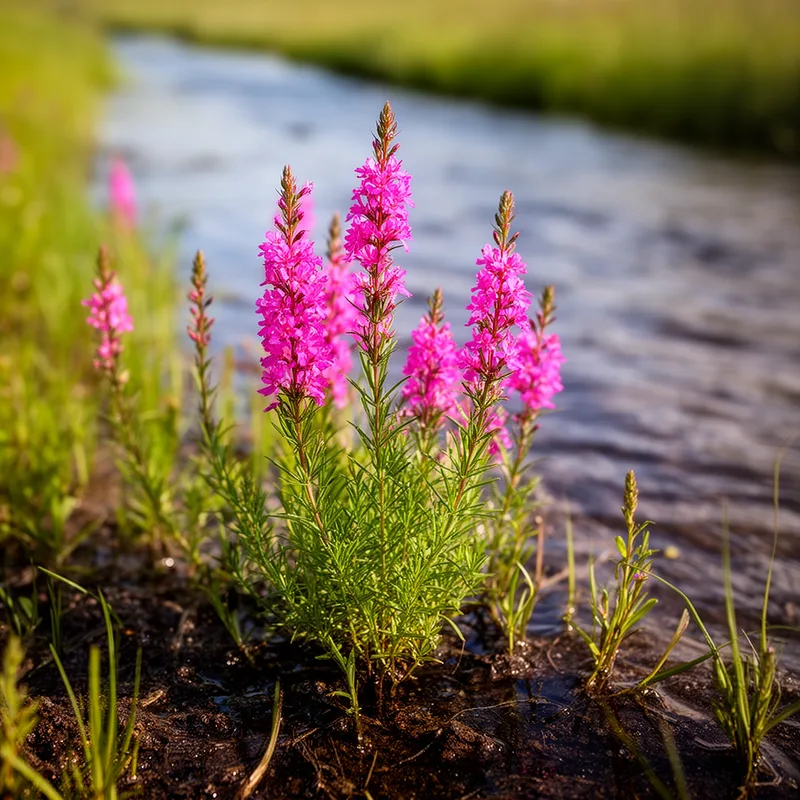
Lythrum hyssopifolia
- noun
- Specialized
- Gardeners sometimes plant Lythrum hyssopifolia for its attractive pink flowers.
Examples
-
Lythrum hyssopifolia is often found in wet meadows and along riverbanks.
-
The spread of Lythrum hyssopifolia in North America has prompted biological surveys.
-
The Lythrum hyssopifolia blooms beautifully in the summer.
-
Many gardeners love planting Lythrum hyssopifolia for its vibrant flowers.
-
Lythrum hyssopifolia grows abundantly in wetlands, attracting many pollinators with its pink flowers.
-
In moist gardens, Lythrum hyssopifolia adds a splash of color with its delicate blooms.
-
You can often see Lythrum hyssopifolia flourishing near ponds and streams during the summer.
Synonyms
A small plant that lives for one year and grows in wet places with tiny pink flowers

A plant that lives one year with small pink flowers in wet places
Surface Forms
Morphology
Lythrum + hyssopifolia
This is a scientific binomial composed of the genus name 'Lythrum' (a plant) and the species epithet 'hyssopifolia' (literally 'hyssop-leaved' in Latin). A learner who knows both parts could infer it denotes a particular Lythrum plant with hyssop-like leaves, but the full descriptive details (annual habit, small solitary pink flowers, habitat) are technical and not predictable from the name alone, so the transparency is partial.
Etymology
Lythrum hyssopifolia paints a simple picture: Lythrum may come from an old word for 'blood-red' because of its pink flowers, and hyssopifolia means 'hyssop-like leaves'. So the name tells you it is a Lythrum with small pink flowers and leaves like hyssop, which helps you remember the plant.

