
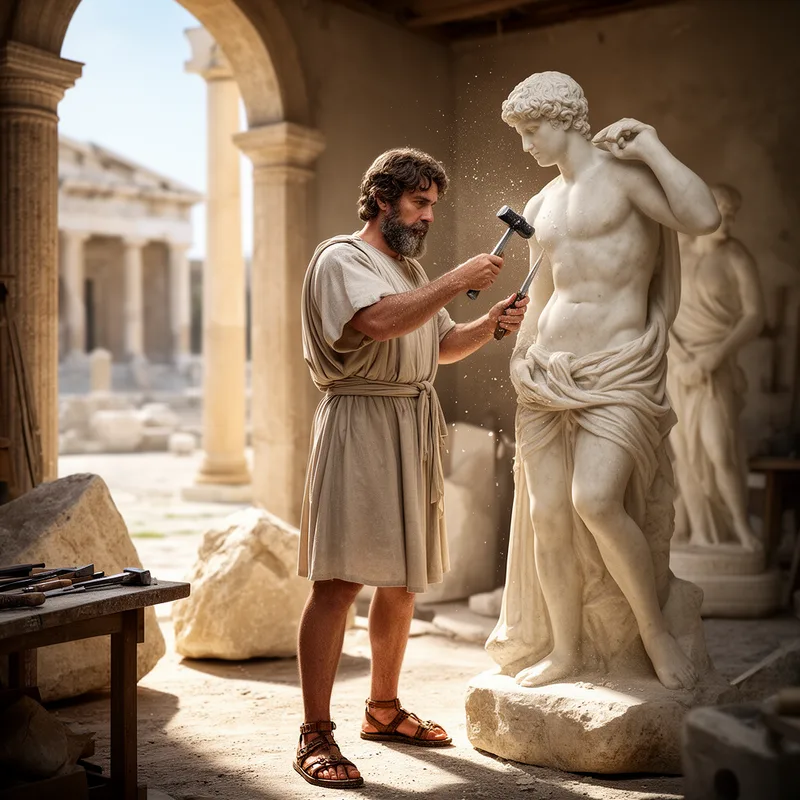
Lysippus


 1
9.9
- proper noun
- In the 4th century BC, Lysippus transformed the art of sculpture with his groundbreaking techniques in human figure proportions.
Examples
-
The works of Lysippus set new standards in sculpture, influencing generations of artists throughout history.
-
Lysippus was an innovative sculptor from ancient Greece, famous for his realistic representations of the human body.
-
Modeled on the male statues of Classical masters such as Polycletus (fifth century B.C.) and Praxiteles (fourth century B.C.), the standard Alexander pose is generally associated with Lysippus, a contemporary of the Macedonian king.
Academic text (2005)
Synonyms
 1
9.9
A Greek sculptor from the 4th century BC known for lifelike statues and work for Alexander the Great
Surface Forms
Etymology
Lysippus is a Greek name made of two parts, lysis meaning 'release' and hippos meaning 'horse'. So a helpful way to remember Lysippus is 'horse-loosener', a clear picture for the ancient sculptor who gave his statues lively movement.