
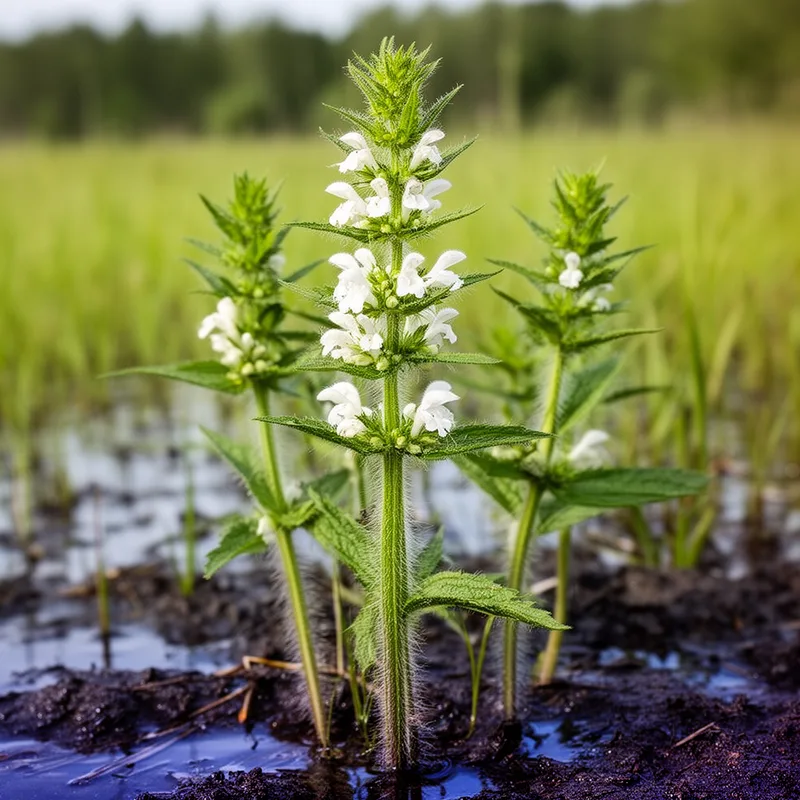
Lycopus europaeus
- noun
- Specialized
- The wetland was filled with Lycopus europaeus, easily recognizable by its two-lipped white flowers.
Examples
-
Lycopus europaeus is commonly known as gypsywort or European bugleweed.
-
The Lycopus europaeus thrives in wetlands.
-
Herbalists have traditionally used Lycopus europaeus for a variety of medicinal purposes.
-
The wetland was filled with Lycopus europaeus, easily recognizable by its white flowers.
-
Have you seen a Lycopus europaeus in bloom?
-
Herbalists have traditionally used Lycopus europaeus for its medicinal properties in various remedies.
-
Have you seen a Lycopus europaeus growing in wet habitats during the summer months?
Synonyms

A hairy herb from Europe and Asia with small white two-lipped flowers that grows by riverbanks and ditches
A hairy herb that grows in wet places with small white flowers
Surface Forms
Morphology
Lycopus + europaeus
This is a Linnaean binomial composed of a genus name + species epithet. If a learner knows 'Lycopus' (a wetland herb) and 'europaeus' (of Europe), they can infer it denotes the European species of Lycopus — a wetland herb; the construction is compositional and follows a regular cross-linguistic scientific naming pattern.
Etymology
Lycopus europaeus comes from old Greek words: Lycopus means 'wolf's foot' because the leaves often look like a wolf's paw. europaeus means 'from Europe', so the name gives a simple picture to remember this hairy European wetland herb with white flowers.

