
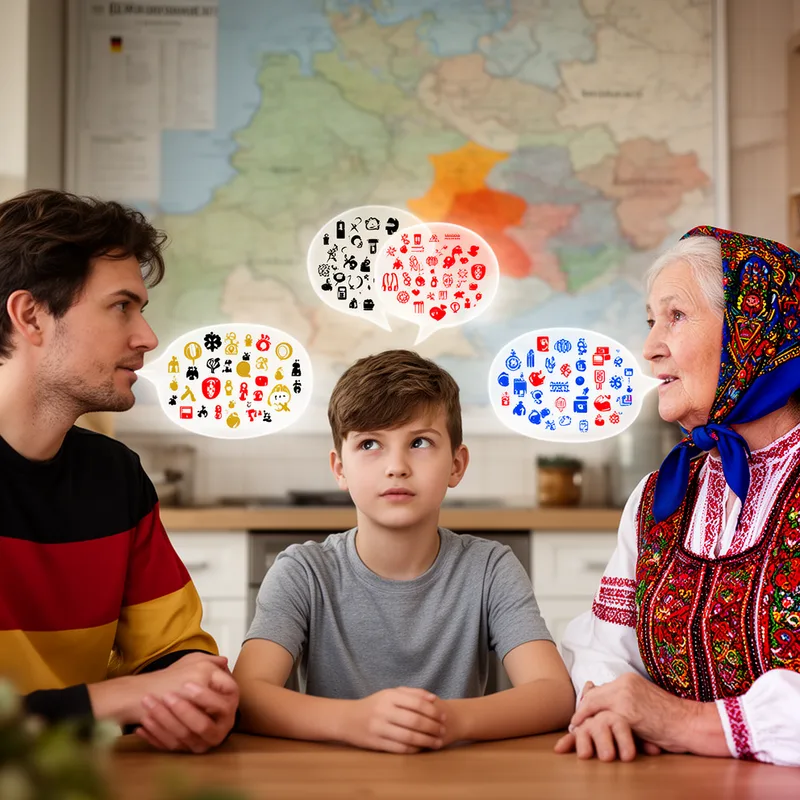
Lusatian
- noun
- Many children in southeastern Germany grow up speaking Lusatian in their homes.
Examples
-
He is fluent in both German and Lusatian, reflecting his cultural heritage.
-
I learned some Lusatian phrases during my visit.
-
The Lusatian language preserves many features lost in other Slavic languages.
-
The Lusatian language has a rich cultural history.
-
Many children in southeastern Germany grow up speaking Lusatian in their homes.
-
He is fluent in both German and Lusatian, reflecting his cultural heritage.
-
The Lusatian language preserves many features lost in other Slavic languages.
Synonyms


 1
9.9
A Slavic language spoken by a small minority in eastern Germany

A language spoken by the Sorbian people in Lusatia, southeastern Germany

A Slavic language spoken by the Sorb people in eastern Germany
A Slavic language spoken by the Wends, also called Sorbian
Compounds
Surface Forms
Morphology
Lusatian = Lusatia (transparent) = Lusatia + an
Formed by adding the adjectival/demonymic suffix '-an' to the place-name 'Lusatia', producing 'relating to or from Lusatia'.
Etymology
Lusatian comes from the name of the region Lusatia, where a West Slavic people live and speak their language. The place name comes from an old Slavic word like Łużyce meaning 'wet meadow' or 'swamp', so Lusatian means 'from Lusatia' and is used for the Slavic language of that region.